For Dillon: On the occasion of what would’ve been his 44th Birthday
by Jack A. Urquhart, Copyright 2023
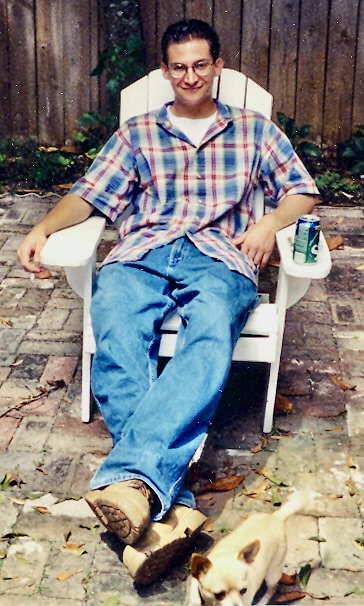
Occasionally, two or three times a year, I tune my heart to the memory of your face to the sound of your voice, to the sly, crooked angle of your grudging smile And sometimes you come in loud and clear your half-assed, fake anger broadcasting some oldie but goodie, egregiously insulting, clear as a fifty-thousand-watt station on a cloudless day: “You’re nothin’ but a big old whore!” I hear you bray again, loud enough for the whole neighborhood to appreciate in splendiferous ROFLOL style. But other times, there is only the painful static, of your complete and utter silence. They say the power of a loved one’s absence fades with time until, like a canyon echo the reminders coming ’round again, diminish with each reverberation But I think it’s only that we’ve become harder of hearing, our attentiveness damaged by the decibels of everyday life. Until we become deaf and numb And finally, in tune with absence, just another voice in the ether– competing for attention. Waiting to be remembered– As I remember you.
March 8, 2024: For Dillon on what would’ve been the 45th anniversary of his birth.
For years, I kept recordings of your voice — tapes dating back to preschool and cassettes passed on by your childhood speech therapist. On one, I remember you stammered heartbreakingly, “I-can’t-get-my–words–out.” A condition that lingered, I think, even after you’d conquered your vocal dysfluence.
Later, the recordings were more surreptitious: you and your sister captured at play — she sing-songing to her Trolls and Pretty Ponies, you in a frenzy of onomatopoeia, kabooming, and kapowing with your Transformers and Ninja Turtles. All this was years before I splintered the family (and so much more). But those records are lost now, the accidental detritus of a half-dozen, haste-driven cross-country and state-spanning moves.
Still later, I kept an archive of your voicemail messages on my cellphone. Such a lovely, vaguely drowsy cadence to your young man’s voice — as if you were awakening from or just before falling into sleep. A full register lower than my own, it was — musical and distinctly masculine — more like your maternal grandfather’s than anything I could’ve bequeathed.
I recall your penchant for hyperbolic messaging in the winding trail of our separate ways — I, on one side of the continent, you, on the other, lamenting “our Colorado golden days of yore.” How strange, I remember thinking, that you, so dismissive of pretense, would employ flowery, derivative language. But then, your own words always came with difficulty, didn’t they?
There were dozens of your rambling messages on my phone, some longer than our actual connected conversations. Sometimes, in the aftermath of your passing, I would play them back in private, desperate to recapture that small part of you. Until, in a blundering, thick-fingered moment, I deleted the entire file and sat inconsolable in the wake of your second death.
Nowadays, your voice is lost to me except in dreams. But you do not visit me there as often as before. Perhaps you’ve moved on — on to new enterprises? I do not know how things operate where you are. I only know I loved you not long enough or well enough to prolong your stay here. And that I hope someday to hear you speak again from across the ever-diminishing distance between us, “Hello, Dad.”
Such a lovely, vaguely drowsy sound, your voice, dear son.
For Raymond L. Boyington on what would've been
his 82nd birthday (09.25)

Sometimes I wonder,
do you hear me
when I talk to you?
Can you feel it

when I speak your name?

Does the gravitational pull
of this unremitting grief
cross the space
we once filled together?

Does it pull at you
where you are?

Do the moments resonate
when I grasp at them --
these ricocheting, random
memories of you?

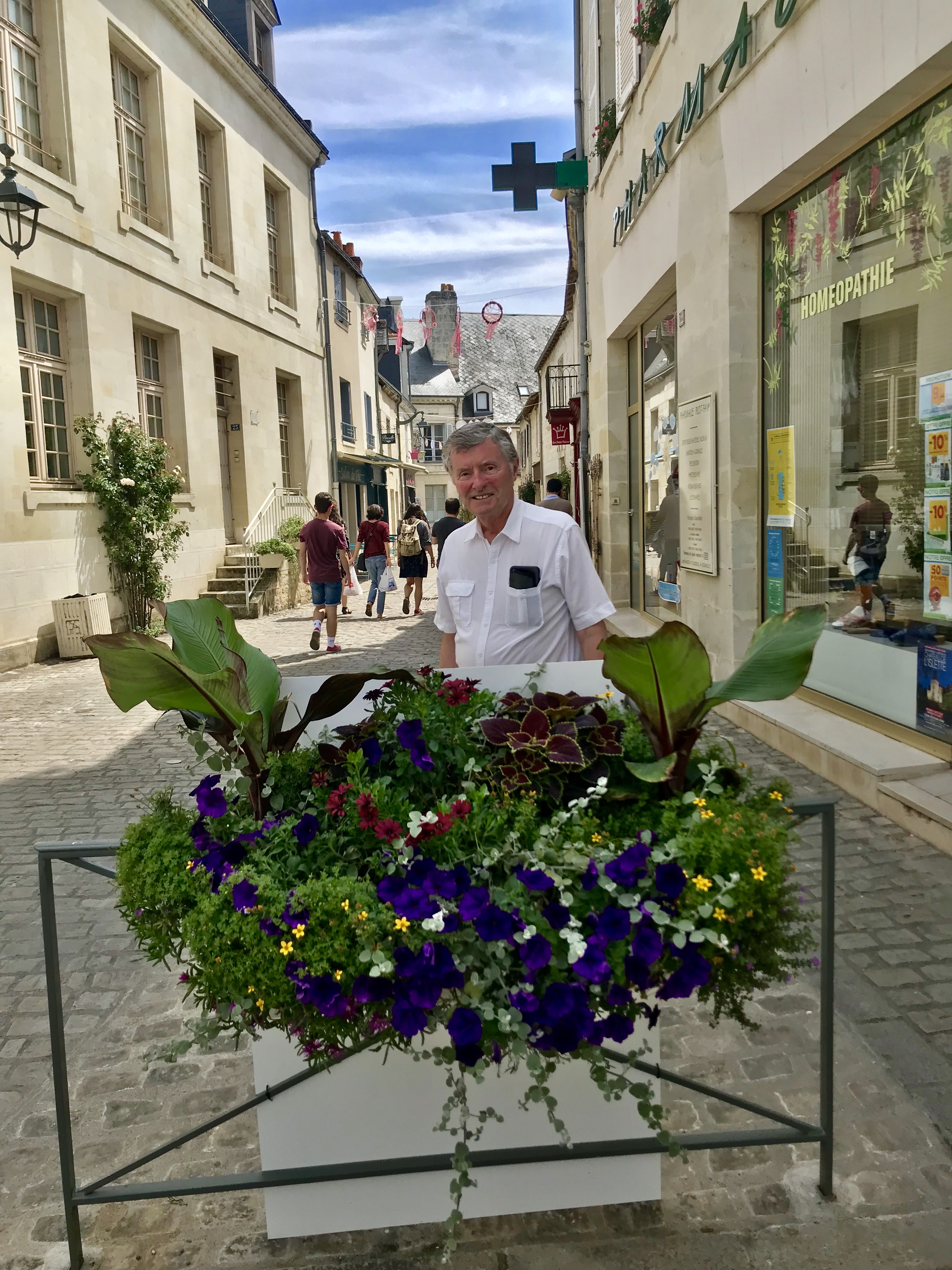
A found photo, for example
dated July 16, 2019:

Azay-le-Rideau and you
beneath a blue-white
stripped sky,
à la française.

Do your gasp
when I catch my breath
at the image
of your smile?

Do you rouse where you are
in agitation when I begin
my litany of "if onlys":
If only I'd known,

If only I could turn back time.

If only a premonition–
some fleeting, scary notion
that one-hundred fifty-six weeks
and four days

Was all I had left of you?

Would foresight have made the day
more than it was, which was lovely
and all about friends,
and food, and good wine?

Would I have been more attentive,
more closely anchored at your side?
Would I have strained to memorize
your every gesture, your every word?

And more to the point:

Would I have taken pains
to show the depth of feeling,
of happiness, of gratitude,
Of pure, unmitigated love

I felt for you?

Feelings too often unfathomed
usually, when it matters most?
As when all that's left
is one-hundred fifty-six weeks

and four days.
The anniversaries keep piling up, don't they?
It's ten years worth today, ten years of absence --
long enough to assemble a shakey colossus
of commemoratives.
Year after year, I shore them up.
And yet, the cracks keep coming,
all the best parts of you--
the sound of your raucous laughter,
the slurping specificity
of your atrocious table manners--
crumbling to scree.
Sometimes I wonder: how much longer
before all that's left are the dust
and bones bits of you.
Your Mom, eternal optimist,
keeps you together much better than I.
She insists you're happier now,
pleased as punch in some celestial afterlife,
amongst your dearly departed kith and kin.
She spins you leader of that pack,
a mastermind of misfits
and bah-bah-black sheep --
souls like you who never found
safe footing on terra firma.
Would that I was even half as creative
as she, who carried you into the world
and out again.
Would that I could conjure it as easily--
you kicking heavenly ass, paintballing holy shit
at a sanctimonious assemblage
of ambrosia-sipping deities and demi-gods,
the do-nothing lot of them binge-watching
the latest drops of "Entertainment Tonight,
Expanding Universe Edition."
How much easier to cope with your absence
if I could hold that bold notion --
you, delivering godly comeuppance
on behalf of the abandoned rest of us,
the countless souls left to languish
in this earthly wasteland of stardust,
broken dreams, and unhappy anniversaries.
Just so You know, Dear Man,
here are a few things,
a small sampling,
of what I've missed
about You.

Surprisingly, I've missed
your everyday bossiness,
those relentless assertions
of "I know betterness,"
those eye-roll-inducing
pearls of wisdom
You were so fond
of tossing my way.
Strange, don't you think,
how the absence
of well-intentioned irritants
can leave one bereft, unmoored,
like one might float away
and nobody would notice,
the way You always did?

I miss the sight of You
from our upstairs window --
so like a jungle-cruise captain
in that ridiculous floppy hat --
and the way You ambled along
on your way home,
grocery sacks in tow,
already rehearsing, perhaps
the next culinary ballet
for our kitchen stage.
God, how I miss them,
your scrumptious showstoppers,
and the way You moved
in their making,
never hurrying the steps,
a study in maximum efficiency
and minimum effort.
As if, even then,
You understood
that all your resources
would be called upon
in the days ahead.

And I miss your stubbornness,
the way You'd sit for hours
over a trivial problem
of technology or taxation
until You'd broken its spell;
and then, when the solution yielded
to your well-tempered will,
I miss the way your smile
would crack brightly
across the horizon
of your face,
smug as a sunup morning.

I even miss your reprimands,
the way You scolded
that I was better than I am,
so much more competent
than the evidence would suggest.
And yes, after all our turns
'round the sun and our stumbles
over that age-old hill,
I miss those up-too-early
Saturday mornings
when You'd peek
from the coverlets
and say, "Come back to bed,"
like the matter was urgent,
like I was the alpha and omega
of your astonishing, unwavering
ardor.

But most of all
I miss your boundless
curiosity, the way You --
ultimate schoolmaster
to the bitter end --
opened my eyes
to a limitless world,
the way You instructed:
Look! See the beauty
as well as the ugliness.
See the myriad ways
that we are different
and the same.
Yes, most of all
that is what I miss
about You, my love --
the way You gave me
an opened-wide-eyes
life.
Ray, rocking that goofy hat again, the one that hangs over my bed now; it’s just two days before our world will turn upside down in a Ventura ER. I imagine how he might have been nudging me on, resisting the photo op, that afternoon: “Keep up; long way to go!” That would’ve been like him. But, of course, I never could; and there really wasn’t. #glioblastoma #spousalloss #RaymondBoyington
From the beginning, you waited for me;
You waited a lot
staying put long enough
for me to understand
how well suited for each other
we actually were:
both of us backwoods born,
waiting like faithful Quakers
for the simple gift
of finding ourselves
in the place just right.
A born teacher, you were patient,
understanding that with repetition
comes confidence;
and so you showed me,
again and again,
that you could be trusted --
an waited for me to know
that it was true.
Worldlywise, you recognized
the necessary boundaries
of personal space,
and remained unobtrusively close
through the best of times,
through the crushing grief.
You knew that silence and space
can work wonders,
And you waited to touch me
until it would mean the most.
And then later, tarrying
on a lighter note,
you took your time again,
permitting only an inscrutable
gap-toothed smile,
as under your tutelage,
I matriculated from boxed wine
to the buttered joy of Chardonnay,
aged in French oak,
from the plebeian satiations
of chips and dips and salsa,
to the voltaic charged thrill
of oysters on the half shell.
"Why settlefor table salt
and grease," you said,
"when here is the briny essence
of the eternal sea,
a nougat of slippery bliss
on a mother of pearl bed --
just waiting to luxuriate
at the center of your tongue?"
A truegourmand of the heart
you waited for me to develop
a taste for these finer things;
Waited for me to get
what it means to accumulate
a thousand favorite recipes,
to pour over a list of ingredients
like a born-in-the-bone scientist
determined to crack
the physical and chemical
mysteries that would unlock
culinary magic.
It took me a while to understand
that food is more
than sustenance.
But you waited for me to get it,
planted a kiss on the top of my head
like a gold star -- when there at table,
spoon in hand -- I finally did;
when the little epiphany
that this is more than a meal;
this is pure love,
deliciously served, artfully plated,
on an everyday dinner service
just for two.
And then, amidst the terrors
of those last months,
you found the will
to wait for me again --
you summoned the strength
that would allow me
the chance to wait on you.
A mere one-hundred days
and change was all I had
against decades
of your patient love.
And so, I sang to you at the end.
I was all I could think to do.
Just sing to you
from my bedside pallet
through that final night
so you'd know
you weren't alone.
The words to "Simple Gifts"
turning, turning in my head
hoping desperately
for the both of us
to  come  down  right.
And then, at dawn
when I tip-toed
momentarily from your side
to summon more of your favorite tunes
(rendered more pleasingly on key)
you slipped silently away.
Twenty-four years you'd waited,
waited for me to catch up;
And there it was --
the first and only time
you couldn't.
(For Raymond, who knew me well — and loved me anyway.)
After a four-month battle with aggressive brain cancer, Raymond Lee Boyington of Ventura, California, passed away on July 16, 2022, while in In-Home Hospice Care. He was 80. Raymond was born in Embden, Maine, the son of Frank Boyington and Alta Quimby Boyington. He was one of seven siblings.
Raymond leaves behind his partner and husband of twenty-four years, Jack Urquhart of Ventura, CA; Daughters, Dr. Sarah Gonda, Thousand Oaks, CA, and Katharine Boyington, Portland, OR; Son-in-law, Dr. John Gonda, Thousand Oaks; Granddaughter Danielle Boyington, San Francisco; Grandsons Dedrick Boyington, Brooklyn, NY, and Nate and Emmett Gonda, Thousand Oaks; and the mother of his daughters, Barbara Boyington, Mountain View, CA. His beloved former partner, Peter Bell, San Francisco, preceded him in death. Other family members include sister Betty LaPoint, Branford, CT; and brothers, Weldon Boyington, Andalusia, AL, Richard Boyington, Sebastian, FL, and Mahlon Boyington, Vero Beach, FL, as well as numerous nieces and nephews whom he loved very much. Not to be forgotten is a long list of dear friends, many of them lifelong, in the U.S, France, Mexico, and Norway.
Raymond received an MS in Physical Chemistry at the University of Connecticut, Storrs, where he was subsequently employed as a lecturer in the Department of Chemistry, as well as the coordinator and liaison for General Chemistry to the statewide university campuses (1969–1980). In addition, Raymond was a Fulbright Exchange Teacher (Kempston, England, 1991) and taught at numerous high schools in the San Francisco Bay Area, including the Harker School, San Jose, University High School, and Lick-Wilmerding High School, San Francisco. Raymond was a pioneer in supporting LGBTQ students and colleagues.
A dedicated and exacting educator and scientist for over fifty years, Raymond mentored countless youths, many of whom have gone on to distinguished careers. He was the author of several widely used Chemistry textbooks and study guides, including Chemical Principles: Student Guide (1973, WB Saunders) and Study Guide for Chemical Principles (1981, WB Saunders).
Those privileged to know and love him will remember Ray for his generous spirit, love of beautiful things — music, literature, art — and his ability to work culinary magic. A self-taught gourmet, Raymond appreciated all things delicious; he was an expert at whipping up a feast from scratch. Raymond took a particular delight in a geta of beautifully presented, extra-fresh sushi, and his love of oysters on the half-shell was legendary among family and friends.
But perhaps more than anything, Raymond will be remembered for his always inquiring mind and quick intellect, winning smile, ability to love and empathize deeply, and his unwavering dedication to family and friends. Not to be omitted from this list of Raymond’s greatest hits is the meticulous care he devoted to his much-prized (much envied), marvelously luxurious Hair.
Those who knew and loved Raymond will miss him more than these few words can express.
I admit it, Kiddo.

I'm not as sharp as I used to be,
and neither are my memories of you.
The effect of advancing age, I expect --
and stubborn self-protection.

That said, a few things still cut
close to the bone.
Your birthday, for example,
March eighth, 4:44 p.m.

Those tiny, bloody fists,
trembling, flailing, furious
(at the loss of your cradling salty sea,
at the intrusion of the baying lupine world?)

Equally keen comes the tart memory
of your lemon-puckered adolescent smirk,
your sour disdain sufficient to sap
the last drop of my limited patience.

And how could I forget your appalling
table manners, that cacophonous slur
of sibilant slurps, your "kiss my ass!
These eats are seriously good!" attitude?

Or the deathbed rattle of your
unconscious gasps thirty-four years later,
those "for god's sake, enough already"
final sighs and moans?

These things slice sharp and true.
Others, not so much.

And yes, sometimes there is guilt
in this creeping forgetfulness.
After all, what kind of father
lets his son slip away like that?

What kind of Dad doesn't go the last mile
for the sake of blood?
My kind, I guess. The selfish kind
(as you and your sister must've thought)?

The kind who clings to a well-rehearsed refrain:
"I have a life, too!" and just won't let go?

But just so you know: I sometimes feel the sting of it --
enough for a good wallow in charges brought against me:
Such a shocking lack of fatherly compassion!
Such a breath-taking display of self-indulgence!

(Ah, thank god for self-deprecation --
Surely the penultimate in pre-emptive strikes!)

But, in fairness, Kiddo, what self-pleasuring
has ever been more sating, more ratifying than,
"Oh my god, s/he/it is so much worse than I"?
I mean, isn't judgment the essence of human nature?

And yes, I know that all sounds exculpatory.

Nevertheless, here's the point I'd like to make --
call it a birthday wish if you want,
albeit a self-serving one, I'll admit:
I hope to do your memory the justice you deserve.

And allow myself a modest measure
in that as well.

I'd like to reconcile the limits
of a love that couldn't save you,
or keep you sane and safe
in this broken-hearted world.

I'd like to entertain the notion that perhaps --
just perhaps -- not everyone born in love
was meant to linger in this life,
not everyone suited to the long haul?

And that what transpired between us --
all the despair, the loss, the grief --
was a lesson in the rightful margins of love,
yours as well as mine.

I like to think that I'm on to something here.
But it's a hard sell -- even for me; a bit too inchoate,
too lenient, too wishful thinking? That said, Birthday Boy,
I'll try for any port in this lingering storm.



 Every Man Jack ...