Copyright 2026 by Jack A. Urquhart
Dear Dillon,
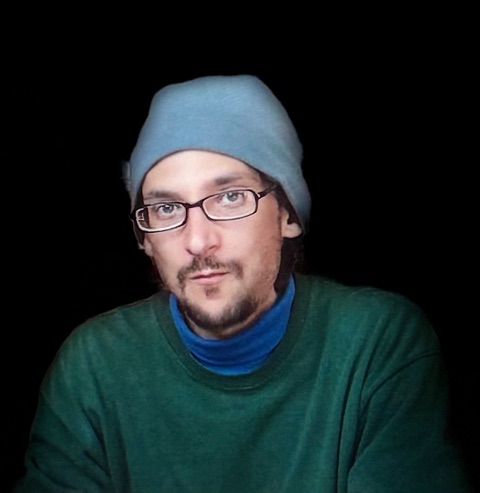
Today, March 8th, is your birthday. Had you lived, you would be forty-seven.
Forty-seven! Imagine that.
Sometimes I try.
I imagine what kind of person you’d have become, how you might have found your place in the world, if you would have escaped that darkness you fell into so young.
You know, the medical experts say that schizophrenia in males typically develops during the late teens to early twenties and that the telltale signs are social withdrawal, emotional swings, disorganized thinking, sleep disturbances, and alcohol/drug experimentation and/or abuse. In fairness, these are behaviors that might be exhibited by any adolescent or early post-adolescent. They are behaviors that might seem unremarkable to the untrained parental eye.
Or to the chronically distracted.
Or to the wishful-thinking, harried father grumbling: “For Pete’s sake, this is just adolescence! And here I am, busting ass, trying to make a living!”
Good lord, the red flags you fanned right under my nose, Dillon!
I can’t help reflecting on that old saw that persons contemplating parenthood should be required to obtain a license—the same as for any potentially lethal activity or undertaking. Certainly, you, dear son, might’ve benefited from such a legal safeguard.
But like many before me, I thought I could do a star turn in the parental arena (despite the lack of preparation or responsible motives). Your absence, son, is a testimony to my arrogance, my ignorance.
You see, I thought unmitigated, unfiltered love was all one needed to be a successful father. Silly me not to foresee that such a naïve approach to parenthood would expose the child—brought willy-nilly into the world without a say in the matter—to a host of unavoidable life-threatening dangers.
Such risk-inviting behavior was, at least for me, motivated by a Freudian out-of-control-romper-room Id-driven urge to procreate, to love—and possibly the most reprehensible of all motives—to be loved in return.
Sad but true: contrary to popular belief, love—especially an immature notion of it—cannot conquer all.
Nevertheless, I wanted you.
From an early age, maybe 10 or 11, I wanted you, Dillon. I planned for you, dreamt of you, wrote your name—alongside your dream siblings—on the back cover of my favorite novel (it was David Copperfield, at the time). I thought the life your dream mother and I would write for you (she would, I fantasized, have clouds of dark hair and look like Merle Oberon in “Wuthering Heights”) would rival anything in the literary canons. It would rival anything Hollywood could bring to the screen.
Talk about magical thinking!
But children are not characters in a book. They are not larger-than-life, airbrushed, idealized actors. They cannot be written, much less imagined, into some silver-screen existence. Children arrive—you arrived (screaming bloody murder, I’ll note!)—with inscribed-in-the-DNA drives and priorities that cannot be edited away, dreamed away, or cajoled away. Certainly not by a distracted parent.
I cite this distraction because, from the start, your challenges ought to have been obvious to me, Dillon. You had poor impulse control (like me). You had a predisposition to melancholy and passive aggression (like me). You were given to secrecy and furtiveness (like me). You craved instant gratification (like me)—all of which, I ought to have discerned, were signs of a potentially addictive personality (like mine).
You must have been ten or eleven, way late in the course of your life, before I finally understood all that.
And then, I wanted the kit and caboodle—every inherited liability—to go away. Magically, if possible. But if not, then talked and encouraged away. By me. By your mother. Your sister. By those hired to the task of “therapying” your inherited issues into non-existence.
To reiterate, I wanted all the unhappy birthday gifts you’d received from me gone—by any means possible.
And, it turns out, it was possible.
Turns out, after much trial and error, you found the means, readily available on the back streets of Seattle.
And so, without fanfare, planning, or intention, you banished your terrors—all of them. You made them—and yourself—vanish.
August 2, 2013. That is when you left us, Dill; seven months short of your 35th birthday.
Another lethal overdose in a Seattle park, they told us.
Perhaps you can sense that all the foregoing is heavy on my mind today. That is because thirteen years ago, when I was still reeling from your loss, someone (with plenty to spare) told me that I lacked compassion.
It was a stinging rebuke, but with the ring of authenticity.
I saw her point and how it applied to you. I saw the truth—when it was too late to make a remedy; it’s water under the bridge now, but I offer this brief epistolary history as a poor one. Think of it as a belated birthday gift to you. And to myself. It is my admission of complicity in setting your life trajectory, Dill.
It is my apology.
You deserved better than you got from me, dear son. You deserved a less distracted, more thoughtful, compassionate fatherly consideration of your challenges, and a better celebration of your many gifts. You deserved years and years of happy birthdays.
You deserved a better state of being; I hope that, wherever you are now, you’ve found it.
Love,
Dad
Copyright 2026 by Jack A. Urquhart


 Every Man Jack ...
Oh Jack. How painful but perfect your message here to Dillion sounds. I can’t imagine your constant more than pain, pain. Being a parent is the most Difficult, the most You Better Do All This Fathering, This Mothering , Right! Parents are So Very Excited and Happy when their Children Arrive and that’s great! But there is No Way we can know what the future of our child and our relationship will become. How do you Parent and make everything The Best it can be? I don’t know. I guess you keep on trying, make mistakes, and keep on trying to do it all the right way. And I am So Very Sorry you and Dillion don’t have another chance. But I’m sure , if it’s possible, he knows you have Always Loved him. I don’t know what else to say. Happy Heavenly Birthday Dillion ❤️ And I’m thinking of you Jack, having to deal with the Most Painful happening of all.