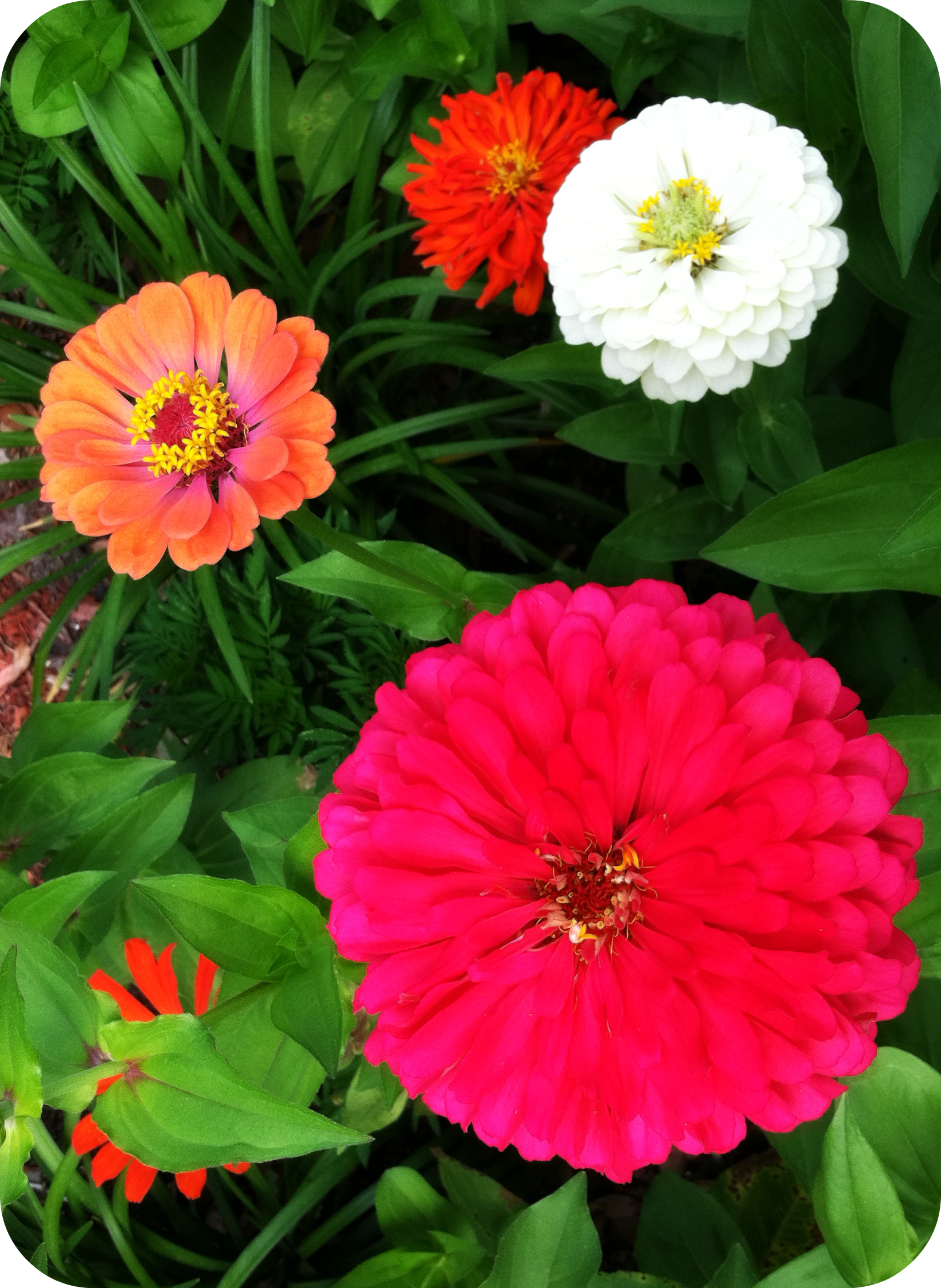
As real as ever, by @jackaurquhart

In Memoriam, Dillon Tyler Urquhart, 3.08.1979 – 8.02.2013

©2013 by Jack A. Urquhart  370 words

Dillon waterfront

Dear Dillon, Dear Son,

You are much on my mind today.

It has been 72 days now.  You’d think that would be long enough, wouldn’t you?  Long enough for anyone to settle into reality.  But I’m not quite there yet.

On the contrary, I keep fooling myself that parents don’t outlive their children; over and over, I grasp at that notion, hold on to it for dear life—until the idea of your death seems as unreal as ever.  I tell myself that it must be a terrible mistake, a misunderstanding—your absence.  Nothing more than another bad dream.  Something I imagined?

I do that sometimes, you know—conjure up a scenario so terrible, and in such detail, that it almost seems real?  And then I pull myself back from the brink with a great sigh of relief, thankful that it’s all been a fantasy, just my head getting away from me.

Only this time, I can’t; this time, it isn’t.

This time I can’t pull back from the truth for more than a few scattered hours; a day or two here and there at best.  I can’t take lasting comfort in any hard evidence that refutes imagination.  No matter how hard I work to ignore the space you’ve vacated, it persists, waits to blindside me—usually when I’m thinking the worst is over and that I’m getting stronger.

Just then, some innocuous moment overwhelms:

A young family roughhousing in the park; a new Daddy toting his infant through the mall; a father and son in animated conversation at a local diner, their blood-deep relationship as plain as the nose on your face, as obvious as their before-and-after versions of the same profile.

That is when it all comes home to me—the permanence of your absence:

No more late-night phone calls and texts, no e-mails; never again a laughing lunch as you slurp your way through a steaming bowl of Pho.

Nothing of that Dillon who occasioned so much happiness, and worry, and laughter, and aggravation.  And love.

So.  Much.  Love.

Except in my dreams, where you show up as real as ever.  As real as ever.

Just as real as ever.

Love, Dad

Posted in Uncategorized | Tagged , , , , , , , , , , , , | 6 Comments

Indie Authors: Yakkers, Tweeters, Braggers? Is that all there is to us? by @JackAUrquhart

©2013 by Jack A. Urquhart   2177 words

Though I speak with the tongues of men and of angels, and have not charity, I am become as sounding brass... 1 Corinthians 13:1

Though I speak with the tongues of men and of angels, and have not charity, I am become as sounding brass…
1 Corinthians 13:1

“To me, it seems disrespectful … that a ‘wannabe’ assumes it’s all so easy s/he can put out a ‘published novel’ without bothering to read, study, or do the research … Self-publishing is a short cut and I don’t believe in short cuts when it comes to the arts.Sue Grafton, American author of detective novels (‘Alphabet Series’), LouisvilleKY.com, August 7, 2012
Amazon wants a world in which books are either self-published or published by Amazon itself, with readers dependent on Amazon reviews in choosing books …  The work of yakkers and tweeters and braggers, and of people with the money to pay somebody to churn out hundreds of five-star reviews for them, will flourish in that world.”Jonathan Franzen, American author (The Corrections; Freedom) The Guardian, September 13, 2013

*****

It has taken me a long time (and several failed drafts) to pursue this post on independently published authors.  That is because, even though I am a longtime semi-professional writer (nearly 30 years and counting), the fact is I went Indie only twenty months ago—which means I still have much to learn.

Part of my education, one of the more troubling parts, has been making sense of the bad press aimed at independently published writers, much of it by A-List, traditionally published authors like the two gifted writers whose words introduce this post.

For nearly two years I’ve read the various allegations leveled against us—charges, it seems to me, that can be distilled into a single sentence:

Independently published writers are lazy, unprofessional, short-cut seeking opportunists whose sub-standard products and practices decimate literary culture.

I confess that I am of two minds about these criticisms, my ambivalence rooted in the fact that there is incontrovertible evidence to support some of them.

Indeed, who hasn’t made the mistake of purchasing an abysmally conceived, written, and copyedited Indie novel at least once, or been taken in by an egregiously misleading 5-star Goodreads/Amazon review of an independently published work?  I refer to reviews that, according to several recent exposés (see here and here), have sometimes been bought and paid for, or posted by friends and relatives of the author.

Furthermore, what frequenter of social media—a primary marketing platform for Indies—hasn’t endured the clamor of authors begging Facebook ‘likes’ and/or auto-tweeting sales pitches?

And yet, I can’t help thinking that Indie critics, several of them at least, have overlooked something important, something to do with why some of us—writers who’ve worked at our craft for years, either professionally or as dedicated students of literature—choose to publish independently.  And what’s more, I wonder if several detractors haven’t been disingenuous in their condemnations.

Exploring a few of the most famous Indie criticisms, as well as the suppositions I pose above, is the purpose of this post—I hope toward achieving a more balanced take on Indie writers and what motivates us.

I will pass quickly over charges of Indie product inferiority as there is ample printed evidence to show that traditionally published authors and their big-name publishers have, for centuries, been felling whole forests in the service of bringing ‘pulp’ to market.  (At least in the Indie Universe, which exists mainly in cyberspace, there is less ecological damage, and taking out the ‘trash’ can be as easy as clicking [delete].)

Rather, I think it more useful to focus on what seems an obvious fallacy in an often-cited criticism of Indie authors—that we are lazy, short-cut seeking opportunists (see introductory Grafton quote).  That charge, I believe, is anchored in the bogus notion that mainstream publishing, as practiced today, is a meritocracy—i.e., if you’re good enough, if you persist long enough, you’ll get published.

Nothing could be farther from the truth.

In the real world, it isn’t the most gifted, the most hard-working writer who gains representation, whose work is optioned and/or brought to market.

As top literary agent Wendy Keller (Wendy Keller/Keller Media, Inc. Literary Agency & Speakers Bureau) makes abundantly clear in this online interview, in the publishing trade, rejection is the rule, not the exception.

Her agency, for example, typically receives 500 +/- author queries a month, about 99.5% of which are rejected out of hand.  Furthermore, out of every fifty proposals actually reviewed by Keller’s agency, only one or two makes it to publishers.  Keller goes on to point out that top agents rarely sell more than 3 out of every 5 represented projects.

Statistics like this, which Keller implies apply industry-wide, lay waste the notion of a publishing meritocracy.  Indeed, common sense, as well as the law of averages, would dictate that many talented, perhaps even gifted, writers never make it out of an agent’s slush pile, their efforts thus consigned to that 99.5% rejection heap.

These are discouraging realities, but this Indie author, for one, sees no point in bewailing them.

The fact is, there are only so many customers in the market place, and the number of writers, talented or not, hoping to accommodate their literary tastes (and/or whims) exceeds demand.  Not every writer gets to be, or should be, a bestseller (I’ll leave unaddressed the question of whether some who are deserve to be).  But does that mean that the rest of us should be denied space on bookshelves—in physical or cyber space?

What recourse beyond a possibly endless cycle of rejection letters do we ‘others,’ some of us talented, have?  Are we to storm the bastions of traditional publishing indefinitely?  Stand outside the door while a few hundred gatekeepers—those long-entrenched arbiters of taste, quality, and ‘tradition’—dither over whether to allow us admission?

Are we to ignore ever-evolving trends and options in publishing in order to maintain some holier-than-thou status quo?

I would argue that independent publishing offers a viable, even sensible, alternative to writers who have ‘traditionally’ been left out in the cold.  Perhaps none more so than those serious writers whose fundamental motivation in taking to the keyboard, in taking up pen and paper, is not a matter of choice, but rather necessity—like breathing, eating, and sleeping.  Writers driven by the impetus to communicate, to understand what it means to be alive, and to attempt the creation of something lasting, perhaps even something that approaches ‘art.’  And to have it noticed—even if that notice is limited to 10, or 20, or a few hundred readers.

That is why I decided to publish my short stories independently on my blog and via Amazon’s CreateSpace platform.  From jump street, I knew that the effort was unlikely to make money (it hasn’t); but I believed that any reader feedback I received would be more useful to me as a writer than the form letter and e-mail rejections I’ve received over the years (and it has been).

Traditional publishing a meritocracy?  I don’t think the facts support that notion.

But let’s move on to another criticism aimed at Indie authors, perhaps the most famous of the lot—one that casts us all into a slush pile of ‘Yakkers, Tweeters, and Braggers’.  For this catchy phrase we can thank Jonathan Franzen, author of the National Book Award winning novel, The Corrections, 2001, and more recently, the bestseller, Freedom, 2010.

In his often-cited 5,500+ word Guardian essay, Franzen decries an Amazon-ian literary world order in which

books are either self-published or published by Amazon itself, with readers dependent on Amazon reviews in choosing books, and with authors responsible for their own promotion…”

before going on to make his famous claim that only

“The work of yakkers and tweeters and braggers, and of people with the money to pay somebody to churn out hundreds of five-star reviews for them, will flourish in that world.”

There is truth in some of Franzen’s kvetching.

As previously noted in this post, the speciousness of many Indie reviews posted on Amazon and other online review sites is supported by hard evidence.

And yet, it’s worth mentioning that even mainstream book reviews—in publications no less esteemed than the New York Times—are not beyond suspicion.  Author Zoë Heller (What was she thinking?: Notes on a Scandal), in a recent NYT Sunday Book Review piece, explores the risks of writers reviewing the work of other writers—a practice common in the NYT and most top-tier publications.  It is a practice, which, Heller points out, can pose serious obstacles to objectivity.  Writes Heller,

“When it comes to negative reviews, the disincentives for a novelist or a poet are … obvious.  Write a bad review and you make an enemy for life; no writer ever forgets a pan.  And these days, when so many writers work in the academy, an enemy can be a real threat to one’s career.  Just wait until the victim of your bad review … turns up on your hiring committee or your prize jury.”

But to return to the subject of Indie reviews: in the absence of critical attention from the mainstream media, several online review sites have begun building reputations for fairness.  Self-Publishing Review, IndieReader.com, and Kirkus spring to mind. Unfortunately, most of them charge a fee—$75 to $575—that is too pricey for many Indies.  That said, one would expect, and indeed hope, to see other (less costly?) organizations established as Indie publishing gains ground.  We will have to wait and see—keeping in mind that the phenomenal changes in publishing are fairly recent and still unfolding.

It takes time to build credibility.

As for the complaint that Amazon forces writers to do their own promotion, I would point out that this practice is not limited to Amazon.  In fact, it is already being co-opted by traditional publishers, especially the smaller houses.  For an example, read Trey Ratcliff’s account here of how, after landing an agent and publisher for his photography book, A World in HDR, Ratcliff learned that marketing and promotions would be his responsibility.

But regardless of the role Amazon plays in shaping marketing trends, the fact is, sales and promotions are wedded to publishing—in traditional and Indie universes.  And those with the talent and taste for entrepreneurship will hold an advantage in the market place.

Which brings me (finally!) to the charge that Indie authors cheapen and damage ‘literary culture’ with their yakking, bragging, tweeting approach to marketing.

To that accusation I would begin by asking, what qualifies as yakking and bragging?

Is it an author web site—let’s say, like the one bestselling detective author Sue Grafton maintains?  A site replete with links to interviews, newsletters, journal notes, book promos, and even photographs of Ms. Grafton’s husband, her chef and personal assistant, her cats?

Is it a 5,500+ word Guardian essay/book promo that, in Franzen’s case, holds forth in print on topics as diverse as Austrian satirist Karl Kraus (the subject of Franzen’s new book, The Kraus Project), Amazon’s Jeff Bezos, Apple versus PC television commercials, the transformation of Canada’s boreal forests, and even low-cost porch furniture on sale at Home Depot?

As for all that annoying Indie Tweeting, I’d be surprised if someone hasn’t already pointed out that it would take some 270+ Twitter tweets to match the 38,000 characters (letters, punctuation points and spaces) in Franzen’s above-referenced Guardian essay, which is but one of dozens of online articles, interviews, reviews, and quotes devoted to the bestselling author.

I cite these examples not to criticize Grafton or Franzen for taking advantage of the promotional opportunities available to them.  Nor do I mean to imply that by exercising those opportunities they’ve been guilty of yakking and/or braggadocio (perhaps loquaciousness, a wee bit of showiness?).  Rather, I mean to suggest that it seems unreasonable to decry and demean Indie authors en masse for making use of the limited media opportunities available to them, unfair to begrudge us our piddling sales tweets and Facebook ‘likes,’ however annoying they may be.

So there!

As for this Indie writer (and in merciful conclusion), allow me to add that I have long since adjusted my authorial aspirations to the realities of the marketplace—and my personality.  The simple truth is, not everyone will write bestsellers and not everyone has the talent for self-promotion (apparently my horn-tooting gene is recessive).  Some of us must settle for a smaller readership—perhaps very small; readers cultivated via our blogs, by means of self-published essays, short stories and novels—and yes, even via Twitter.

Some of us may yet hit it big.  Others, not so much.

I can live with that.

I can because I believe that for myself and for many others driven to write and publish independently, our reasons outweigh issues of ego and sales figures, dollars and cents (most of us earn less that $500 a year)—not that those motives are necessarily unseemly.  But there is more to us than that.  There is something that impels us to the intellectual, emotional, and physical exercise of writing.  Something about the quest for clarity and connection that urges us to the task.

And what good is all that effort if we don’t make use of viable options for sharing it?

 

Posted in Uncategorized | Tagged , , , , , , , , , , , , , , , , , , , , , , , , , , , , , | 9 Comments

A Rocky Mountain Lullaby (For Dillon), by @jackaurquhart

Gods little mascot©2013 by Jack A. Urquhart     (1115 words)

September 17, 2013

Dear Dillon, Dear Son,

I have been thinking about your early years, trying to remember some of the salient moments of your childhood, events that seem conspicuous in terms of our relationship.  Of course, my take on these long-gone years is subject to the pitfalls that plague any would-be historian: the human tendency to airbrush the facts (Lord, how we want things neat and tidy!), to substitute supposition for detail gone AWOL, the temptation to steer our recollections along a biased trajectory.

I plead guilty on all counts.

Even so, I am compelled to attempt your story, albeit in vignettes.  That is because I miss you more than you can know.  Literally.  And now that you’ve gone where smartphones are useless, I find any effort (even a faulty narrative) that brings you back to mind lessens the sometimes overwhelming sense of separation I feel.  And isn’t that ironic, given an entire continent lay between us at the end.

But tonight I want to remember a closer time.  I want to remember you as a toddler—or rather, an incident from that era.  I want to recall how determined you were to work your will.

So … here is a memory, an episode in the story of Dillon Tyler Urquhart; maybe you recollect it too?  And from a more advantageous angle?

The family is living on Mallory Street in Lafayette, Colorado.  It is our first real home, your Mom’s and mine, and you are our first, our only child, as your sister Devon’s birth is yet months away.  You are three years old, Dillon, and heart-stoppingly beautiful—and truth be told, a sometimes pain in the ass.

At nap time, for instance.

Indeed, the idea of a mid-afternoon snooze is anathema to you.  God forbid anything should separate you from Mom or Dad for more than a few minutes at a time.

All morning, you play cherub on a baby-blue cloud; but come 2:00 p.m., you turn Devil, bring out the big guns—the cranky, screeching, red hot fire and brimstone tantrums.

Dillon, I don’t know how you manage it.  Oy!  Such an infernal ruckus from a little tyke!  Such howlings as one imagines from the depths of Hell!  Only imagination isn’t necessary on Mallory Street—not at nap time.  Hell is right here on Earth.  And it’s been this way for months.

Your mother and I have tried everything: consistent sleep schedules to establish a set routine, back rubs as you lay a-crib to calm you toward sleep, favorite crib safe toys tucked in with you.  We check in at ten minute intervals as you lay shrieking to show you’ve not been abandoned.  And God help us, we even try reasoning with you:

“It’s important you get rested up, Dill.  That way you’ll have more energy for playtime later.”

Nothing works.  In fact, things go from bad to worse.

It is just a matter of time before the neighbors, alarmed by your daily screams, take steps.  This is Boulder County, after all—bastion of sensible, compassionate child rearing practices; citadel of Doctor Spock pediatrics.  No, not the guy from Vulcan!

In plain English, this is ‘no-spank territory’.

All this by way of saying that outside intervention is inevitable.

It comes knocking at Mallory Street on a frosty Sunday afternoon—civic concern in the person of a formidable Policeman.  Indeed, ‘Officer Burly’ all but fills the doorway and he wastes no time informing your bedraggled parents that a report of possible child abuse has been lodged.  I think you must be listening from your crib, because right on cue, you oblige with an ear-splitting screech.

I can’t help it, Dill: I laugh outright, inquire if it’s possible to lodge a complaint of parent abuse, invite the officer to inspect first hand the source of all the commotion.

Of course, the moment Officer Burly approaches your crib, removes you for a closer look, you are all sweetness and light, nary a whimper.  H-e-l-l-o Dillon, heaven’s little mascot!

A five-minute inspection and you are pronounced safe—fit for future tantrums.  But luck is with your Mom and me today, for Officer ‘B’ is something of a child psychologist himself.  A pop psychologist.  Literally.

“Have you tried top forty?” he inquires. “My daughter was a screamer.  Neil Diamond did the trick.  She liked a catchy refrain: Sweet Car-o-line, nah-nah-nah,” Officer ‘B’ warbles.  “Must’ve played that track a thousand times before she was four.  Kids like simple rhythms.  They like repetition.  Something that’s always the same.”

You don’t say?

Talk about a godsend.  That’s Officer ‘B’.

And John Denver—aka Henry John Deutschendorf, Jr.

It was his “Rocky Mountain High” did it for you, Dill—that and “Leaving on a Jet Plane.”  Those tunes on eight-track were lullabies to hours of blissful sleep.  There must have been something in Mister Deutschendorf’s soaring, beautiful voice.  Something as reassuring and as permanent as the Rockies?

Which brings me back to where I started, Dill.  For it’s clear to me that there really is something to that old saw, “like father, like son”; for our relationship even in those early days was, I think, a struggle of strong wills.  A struggle that lasted to the end of your too short life, Dear Boy; a campaign that pitted your need for a familial always accessible safety net against your Daddy’s determination you should acquire the confidence that springs from self-reliance, from knowing you could stand alone when necessary.

So I didn’t want to get too close once you ventured out on your own.  I didn’t want to stand next to your struggles lest you reach for the ‘net’ unnecessarily.  And, in truth, I didn’t want the mess, the pain of witnessing firsthand the inevitable suffering that comes with growing up.

That was perhaps unpardonably selfish of me—and a terrible mistake.  A mistake not to have offered more freely and more often the comfort of something Rocky Mountain solid.  Something that might’ve soothed your sleepless nights in those final illness-plagued months.  Something more than phone calls and letters.

And although it is too late now, too late to bring you back, I send these few words into the ether, along with a few of Mr. Deutschendorf’s finest, against the hope that they will find you.  And help you rest.

His sight is turned inside himself, to try and understand
the serenity of a clear blue mountain lake.

And the Colorado Rocky Mountain high, I’ve seen it raining fire in the sky.
You can talk to God and listen to the casual reply.
Rocky Mountain high, Colorado. Rocky Mountain high.

Sleep tight, Beautiful Boy.  Sweet dreams, Dear Son.

Love,

Dad
xox

Posted in Uncategorized | Tagged , , , , , , , , , , , , , , , | 12 Comments

One Month, by @jackaurquhart

©2013 by Jack A. Urquhart, 680 words

Dill One Month 2September 2, 2013

Dear Dillon, Dear Son,

It is one month today since you left us, since you died in a Seattle hospital with your mother and I standing at your bedside.  Oh Dill, I wish I could express how much your absence still feels unreal—even though your ashes are in the next room as I write this.  Even though I keep close the few mementos you left: your I.D. card carried in my wallet; your baseball cap worn when I work in the garden; your photos on my cell phone and computer.  Even the photos taken in your hospital room on that final dreadful day.

Perhaps this reliance on keepsakes seems strange.  But so is grief—all the feelings that impel one, or at least this one—to keep revisiting the past.  As if that could ever mitigate the loss.

And yet, I keep trying.

The thing is, Dill, I linger over these tokens—yes, even the photos taken as you lay dying—not out of morbid obsession, not because I’m afraid I’ll forget your face; but because I want to re-live your beauty.  It’s right there, you know—even in those deathbed shots.  That is because it looks like you’ve just fallen asleep!  I swear, I can see your childhood-self shining through in that hospital bed.  The little boy (who was often such a pill) is sleeping there in the grown man!  I see his gorgeous eyes, so perfectly almond-shaped and long-lashed in slumber.  I see little Dill’s pursed and budding lips, his hair sweeping back in dark moist strands.  And your beautiful hands—an artist’s hands—that are so like your sister’s, your Mom’s.

So I look again and again because I don’t want to believe that I’ll never see you again—the child or the man.  Not in life, anyway.  I don’t want to accept that.  Not yet.  And I look because that’s all I’ve been able to do.

Until today.

Today, I found the courage to listen.

Today I played it again—your last voicemail, saved on my cell phone.

The date stamp is July 5, 2013, 9:11 a.m.  You had only 28 days to live.  I wonder if you sensed as much—if you’d guessed that time might be running out.  Along with everything else, I wonder if there wasn’t some glimmer of foreknowledge in the slow repetitive gravity of your speech patterns, in each heavy, disconsolate pause.

Oh Dill!  You can’t know how sorry I am to have missed that call.

Here is what you said:

“Hey Dad, it’s me. Um—Just calling to let you know—um—I made it out of the hospital.  I’m at the—um—Solutions Center. Um—I’m trying to find some solutions now and, um—just trying to get in, back involved with family.  I just really miss, I really miss a lot, a lot of the times that, that, that we’ve had together; that, that you and I have had together, but—um—well, anyway.  I’ll call.  I’ll call you back later today.  All right—Love you Dad.  Bye.”

Dillon, I don’t remember if we talked after that day.  Surely we must have.  But I can’t be certain.  I can’t say for sure that that recording wasn’t your last goodbye.  And I can’t remember if I had the chance afterward to say something to make you feel more connected.  Less lonely.  Something—anything—powerful enough to silence even briefly the voices in your head; some few words that would help you to feel less afraid, more secure of your place in our family.  In this world.  Something beyond the cliché—so that you would know that you belonged.

Dear God, I hope I did.  I hope I gave you (at least!) a last blessing.  Something as precious as the one you telephoned to me on that July morning eight weeks ago.  Thank you for that.

But just in case I forgot to say so back then, and against the possibility that you might still be listening, I offer this one:

Love you, Dill.  Always.  Forever.

Dad
xox

Posted in Uncategorized | Tagged , , , , , , , , , , , | 5 Comments

Word Wishes for Dillon, Wherever He May Be … by @jackaurquhart

©2013                                       390 words

“Oh, earth, you’re too wonderful for anybody to realize you.  Do any human beings ever realize life while they live it—every, every minute?”

Thornton Wilder (“Our Town”)

Dillon Tyler Urquhart, 1979--2013

Dillon Tyler Urquhart, 1979–2013

Dear Dillon; Dear Son,

I have always believed that words have power—the power to traverse great distances, the power to break or heal the human heart.  That is why, despite the events of last week, the dream from which there seems to be no waking, I set these few symbols loose in the ether hoping that I’ve not been mistaken all these years.  Hoping that somehow, some way, the meaning embedded in these modern-day digital hieroglyphics will find you where you are.  Wherever that may be.  And that they will bring solace.  To us both.

Dillon, I want you to know how profoundly you are loved.  Still.  And how many times we have all—your sister and Mom; your friends; your Daddy—wished you back again.  I want you to know how we’ve wished that the people who passed you in that Seattle park where you lay unconscious last Saturday could have recognized you as someone’s dear child—the longed-for consequence of your parents’ love, of all our hopes and dreams.  Not a nameless throwaway street person.  And I wish that you’d not been there at all, that the illness that caused you so much suffering over the years had not driven you to that desperate place.  And yes, Dillon, I want you to know that I wish I had done more to keep that from happening.  Because the father in me knows that there was.  More, that is.  Always more that could be done.  So I wish for your forgiveness, too.

But most of all I wish you to know what a privilege it was to be there when you took your first breath—and your last.  I wish you to know, as a dear friend has so eloquently written, that despite “the grooves of anxiety and worry that spun the record of [our] relationship…” I count it a gift to have been—to be—your Dad, and that I wish you whole and free at last from suffering, having awakened in some happier place.  And that if life is truly but a dream, then I wish someday to rouse there too.  And find you waiting.

Love,

Dad

Posted in Uncategorized | Tagged , , , , , , , , , , , , , , , , , , , | 4 Comments

Lost or Found, Relative or Fake: My brush with Indigence, by @JackAUrquhart

New Twenty Dollar bill

©2013  980 words

There has never been a time when I didn’t worry about money.

I write that sentence understanding full well that I know nothing of abject poverty.  Indeed, pecuniary anxieties, when they’ve come my way, have been the ordinary middle-class variety.  Non-life threatening.

In my youth those worries were about supplementing the minimal allowance that my parents were occasionally able to afford—about raising money to pay for a Saturday afternoon movie, a new pair of track and field shoes, things my more affluent schoolmates didn’t give a second thought.  Later, as a young man unskilled in money management, my troubles sprang from foolish choices—how to make rent and pay college loans after having spent too much on good times.  Later still, after I’d become a husband and father, monetary challenges were more domestic in nature: how to afford sky-high childcare, what to do about a furnace in need of repair.

Now that I’ve entered my so-called golden years (though I think the reference to ‘gold’ in that tired old cliché greatly exaggerated), my partner and I keep ends met without much difficulty, even on fixed incomes.  That said, there are still those nights when my sleepless mind gets carried away by worst-case scenarios—all the ‘what ifs’: What if a serious illness strikes?  What if an aging parent needs help?  What if Social Security turns out to be a ruse?

I reiterate that the cares I’ve enumerated don’t add up to a hill of beans against the unscalable Mount Everest of worldwide poverty.  Not when, as I read a few weeks back, 50% of the planet’s 7 billion+ human beings live on less than $2.50 a day.

In a world where such statistics rule my petty economic concerns don’t count for much.  I know that I’m privileged.

Even three years ago when my partner and I lost our California home in the great U.S. bursting real estate bubble, we never lived hand-to-mouth; we never worried we’d be on the street.  That’s how fortunate we were; how fortunate I’ve always been.  Losses happen—a job, a home, savings—my life stumbles on.

Of course, it could be argued that all losses—even those that First World’ers like myself encounter—are relative in the great scheme of things.  In fact, lately I’ve been struck by how even a small loss can assume unexpected proportions—relatively speaking.

For example, a few weeks back, I lost some cash.  Somewhere between the downtown ATM and my home, the money went missing.  I remember looking for it in the usual places—for all of a few minutes.  It never occurred to me then that my loss could have—for a full day—made the difference between hunger and satiation for 8 of the planet’s impoverished inhabitants.  I didn’t consider that, until last Friday—until I’d experienced a brush with indigence.

Here’s how it went down.

On Fridays I go to the gym at 5:00 a.m.  Afterward, my reward (for all that pain and suffering) is a trip to Starbucks.  Only last Friday, my routine was interrupted.  There on the sidewalk outside my gym I encountered a family, the mother and daughter seated curbside while Dad fed coins into a nearby pay phone.  Both bedraggled parents looked to be in their early thirties; their little girl, perhaps six or seven.  It was 6:30 a.m.  Early for a young family to be on the street.

As I approached, the Dad, pointing at his wristwatch, hailed me.  I thought him inquiring after the time.  Instead, he asked if I could direct him to the nearest pawn shop.  But before I could respond that none of them would be open at this hour, he’d begun relating his family’s situation.  He’d just begun a new job, he explained in a breathless, embarrassed rush; however, payday was 3 days away.  Meanwhile, he said, his voice breaking, the family hadn’t enough cash to cover their temporary accommodations at a nearby motel.  Unless his wristwatch could fetch $20.00 at pawn, they’d be on the street.  It took less than half-a-minute for the man to tell the tale.

I remember that at some point during his embarrassed, tearful monologue, I began digging in my pocket for my car keys, thinking—I’ll admit it!—that I had a legitimate ‘out,’ a way to sidestep the awkward encounter.  You see, I don’t carry my wallet on gym mornings—only my driver’s license and a Starbucks card.  But as I went fishing for my keys that morning, I found something else.  I found a twenty-dollar bill in my pocket—right where I’d ‘lost’ it.

There was nothing grand or magnanimous in what happened next.  Rather, the act of retrieving the money and handing it over to that bereft father was a reflex, automatic—like discovering something in the Lost and Found and handing it over to its rightful owner.  The same as anyone would do.

I don’t rightly recall the father’s response, though I know he called his gratitude after me as I hurried on to my car—something about hope.

I do remember that, sitting in my car in the aftermath, I didn’t feel noble.  I didn’t feel proud or generous or righteous.  Rather, I felt confused, even ashamed—ashamed that I’d considered sidestepping the situation.  But mainly, I felt shaken from my comfort zone.

In retrospect, I know that it’s possible I was scammed, that the man’s tears were part of a carefully rehearsed act.  But I don’t know that it matters—not relative to those few shaky moments following the encounter.  Not in comparison to the realization that twenty dollars could assume such momentous proportions, that a loss I’d dismissed could determine—if only for a day—whether there was shelter or no, whether humiliation would rule or a shred of human dignity be preserved.  Whether hope would be lost or found.

Given the world we live in, I can’t help thinking there is nothing relative or fake about any of that.

Posted in Uncategorized | Tagged , , , , , , , | 5 Comments

A Letter to 5 Cowardly U.S. Senators, by @JackAUrquhart

April 18, 2013

Forgotten Future

Forgotten Future (Photo credit: much0)

Honorable Max Baucus (D-Montana)
Honorable Mark Begich (D-Alaska)
Honorable Heidi Heitkamp (D-North Dakota)
Honorable Mark Pryor (D-Arkansas)
Honorable Marco Rubio (R-Florida)
United States Senate,
Washington, DC

Senators,

I am writing to express my disappointment, indeed, my sorrow, that you could not find the courage to support expanded background checks for gun buyers in yesterday’s Senate vote—even though polls show that 90+% of Americans favor them.  I fear that you and the forty other senators who voted against this sensible measure to reduce gun violence have paved the way for more mass shootings—more Newtowns, more Auroras, more Tucsons, and more Virginia Techs.  Furthermore, I believe that your collective votes have exacerbated the notion that members of Congress are excessively beholden to (and cowed by) the gun industry and its various dependent special interest groups, like the National Rifle Association.  How sad that you have allowed the profit-driven and extremist priorities of these entities to trump the cause of public safety.

Please know that although I am a lifelong Democrat, I will henceforth engage with legitimate political action groups—such as Gabrielle Giffords’ Americans for Responsible Solutions, Mayor Michael Bloomberg’s Mayors Against Illegal Guns, and The Brady Campaign to Prevent Gun Violence—toward defeating members of Congress (be they Democrat, Republican, or Independent) who, as today’s New York Times editorial so aptly put it, seem to think that:

“…the carnage at Sandy Hook Elementary School is a forgotten tragedy.  The toll of 270 Americans who are shot every day is not a problem requiring action.  The easy access to guns on the Internet, and the inevitability of the next massacre, is not worth preventing.”

In closing, I can only echo the sentiments of Patricia Maisch, who survived the 2011 mass shooting in Tucson, and shouted her dismay from the gallery after yesterday’s Senate vote; indeed, the outcome of that vote was truly shameful.

Sincerely,

Jack A. Urquhart
Mount Dora, Florida

*****
Dear Blog Readers: You can find contact information for your Congressperson here (U.S. Senate) and here (U.S. House of Representatives).  If you have not already done so, I urge you to contact your Congresspersons and to share with them your beliefs (whatever they are) on gun violence as a vital issue of public safety.

Posted in Uncategorized | Tagged , , , , , , , , , , , , , , , , , , , , , , , , , , , , , , | 3 Comments

Out-of-Order Moments: A Shortlist, From my Youth, by @jackaurquhart

(Inspired by WordPress Daily Prompt, 4.14.2013: The Satisfaction of a List)

©2013  1100 words

1.  Apopka, Florida 1950-something:  I never know how to begin, so I just blurt it out—say that I want to plant flowers.  My aunt smirks at this, says little boys plant corn and sugarcane.  Maybe cucumbers n’tomatoes.  Manly things.

Cucumbers and Tomatoes

 She says, Flowers is sissy.  So I’m surprised when Daddy says he will help.

It’s your birthday.  Five years old, he says.

In the backyard, he uses a stick to draw shallow lines in the silver-black Florida soil.  The lines spell out my name in great-big letters. We drop zinnia seeds in, brush the dirt back over.

ZINNIA, GIANT, VIOLET QUEEN (FRONT)

Daddy says when my flowers bloom, people flying in airplanes will look down and know that ANDY lives here.

But the flowers don’t thrive.  Weeds and sandspurs choke them out.  Only a few zinnias ever bloom.

Doesn’t matter.  I remember what my Daddy said—about those people in airplanes.

2.  Bloomsburg, Pennsylvania:  I am fourteen years old and so shy that I rarely speak at school; so tall and skinny that it invariably hurts to be noticed.  Which is why I don’t like sitting at the front of the class, exactly where the art teacher has placed me.  This is especially difficult today because a popular tenth-grader is modeling for us.  He is movie star handsome, all quarterback shoulders and track-star legs; a flop of ginger-brown hair curtains his brow, and there isn’t a pimple in sight.

Charcoal Sketch

When the teacher leaves the room, the model steps down from his pedestal, approaches me, bends close to examine my charcoal sketch.  His eyes are teardrop shaped, golden, sharded with green splinters.  It is easy to believe him when he says that I have artistic hands, such long eyelashes—when he says, maybe you should be the model.

But all that is nothing—because he wants my sketch.

I keep hearing how talented you are, he says, smiling, placing a coin on my easel.  Here.  This should cover it.

For a moment I imagine how it will be—having a celebrity best friend.  I picture the two of us strolling the school halls together, and how that will feel—like living in a Technicolor movie—the being known, the being close.

"Destination Moon" lobby card

But then he steps away, declares loudly for the benefit of the class: twenty-five cents is a lot to pay for a blowjob, but I hear he’s pretty good!  And the movie goes dark, everything back to black and white.

Never mind that I’m not sure what a blowjob is.  I just want the movie to end.

3.  Plymouth, Florida:  I am maybe 9 years old.  My Daddy has just finished polishing our Bel Air station wagon.

1957 Chevy

He sits on the front stoop smoking a cigarette while my brother and I play tag with Walter McCafferty on the front lawn.

Storm’s blowin’ up any minute, Daddy calls to us kids; and right on cue, a crackle of lightning, a roll of thunder speak truth to power.

You boys come on in now.  It’s dangerous out’n weather like this, he hollers.  And lo and behold, my brother—usually a blond bundle of squalling disobedience—complies.  Lickety-split, he makes for the front stoop where our Daddy is lighting up another smoke.

But not me; not Mister good little born-again Baptist boy.

Today I’m feeling the devil.  Today I’ll show my ass—make a big deal of keeping up the chase, running after Walter McCafferty through the hedgerows and azalea beds.  Until a deafening crash, a stench—like the nose-pinching fumes that come when a TV tube blows—strikes me stock-still.

Lightning 20090521

In a twinkling, blue-white stars are dancing ‘round me in a close orbit, a glittering tutu of constellations; fiery comets too—their bright tales dazzling, fritzing out sparkles.

In a flash it’s over and I make a beeline for my Daddy, who surprises me with a hard slap across the face.

You damn fool! he blurts.  And right away I think about the Bible—how it says in Matthew “whosoever says, ‘Thou fool,’ is in danger of hell fire,” and I wonder if Daddy will get burnt to a crisp by another bolt of lightning.

But here is another shock—my Daddy grabbing me even harder, crushing me against his chest this time.  I don’t know what will happen next, so I concentrate on the smells in his shirt, the one he wears to work.  I make out Argo Starch, sweat, tobacco, and something else.  Something metallic and flinty—like the flux-coated welding rods Daddy uses at work to spark his machines to life.

It is the way I think fear must smell.

Later, splashing around in the bathtub, my brother gives me an Indian burn, says I wasn’t ever struck by lightning.  Claims there weren’t any stars making pirouettes around me, no sparkling comets either.  You always ‘zaggerate, he tells me. Daddy thinks you’re a damn fool.

But I know better.

4.  Apopka, Florida:  I am maybe twelve, worried what it will be like when the family moves to a different state come summertime.  So I do what I always do when I’m afraid.  I read.

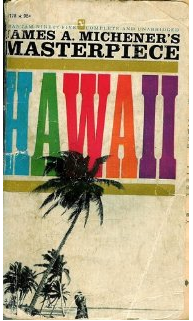
This time it’s Hawaii, by James A. Michener.

Hawaii

My mother isn’t happy that I’m reading this book.  That is because she knows there are a lot of people doing racy things on way too many pages—so I wait till everyone is asleep at night, pull the chenille bedspread over my head, read with a flashlight.

My mother is right about how sexy Hawaii is.  There are lots of characters doing things I don’t understand, like prissy Reverend Abner Hale, whom I hate.  But there are also the sailors on Captain Rafer Hoxworth’s ship—sailors who take giggling, Hawaiian native girls to their beds, two and three of them at a time.  I try to imagine what they do tussling under the sheets.  Because Mister Michener isn’t saying—or at least not in ways that make sense to my mind.

What’s scandalous is that my body seems to understand.

But there’s other stuff—stuff that’s more unsettling.  There’s the few pages describing sailormen who do something different; the one or two of them who would rather frolic with the half-naked Hawaiian boys and men who row out to greet the tall ships that come sailing into the Sun-Swept Lagoon.  There’s the sailormen who frolic all night long with their native boyfriends.  And though I’m not sure what they do together, I know that it’s supposed to be—Queer.  Which is why I read into the wee hours hoping to understand.

The next morning, groggy and frightened, I look at myself in the bathroom mirror and think about James A. Michener’s Hawaii.  And those sailormen.  And their native boyfriends.  And I think to myself:  You are like them.  Queer.  That’s what you are.

Decades will pass before that fear abates.  Before I can handle those words.  Before I can speak them.  Out loud.

Posted in Uncategorized | Tagged , , , , , , , , | 1 Comment

The Keeper of the Flame, by @JackAUrquhart

©2013    1350 words

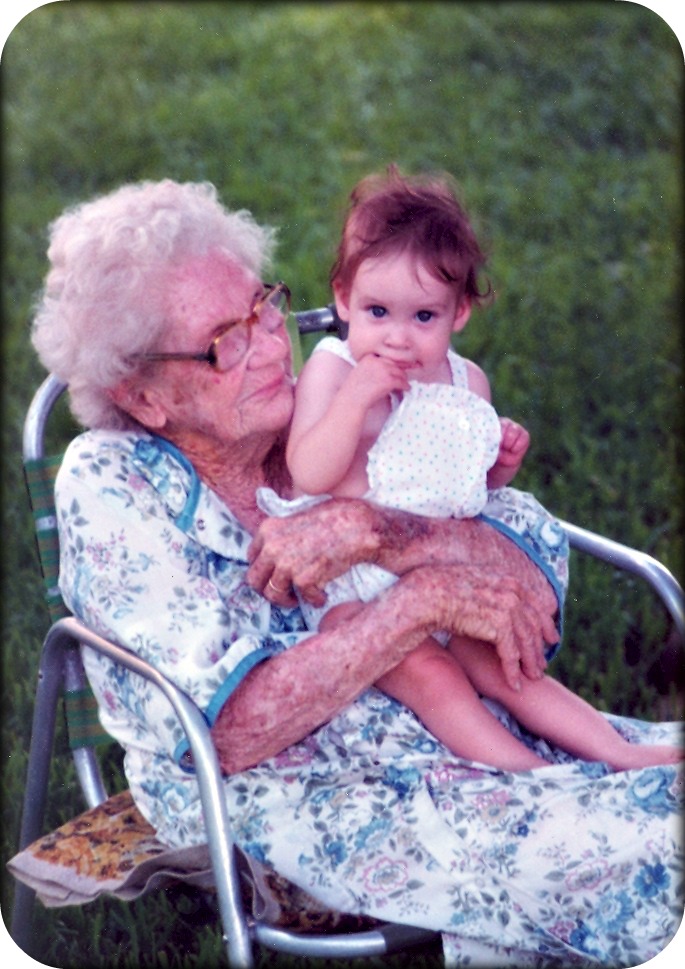
GrandmaAdaNarcissusThis is a decades-old photo of my paternal grandmother.  She was in her early nineties and still living in her Central Florida home.  That’s my daughter Devon she’s holding; I think Dev was about 18 months old at the time.  Grandma’s name was Ada Narcissus Urquhart (nee Lovell).

When I was a child, I used to tease her about that middle name—used to try to impress her with my knowledge of mythology gleaned from the World Book Encyclopedia.

“Careful, Grandma,” I’d caution, sassing up to her while she was filling the washing machine or my plastic play pool.  “There’s your reflection in the water.  You don’t want to fall in and get drownded in a lake of love.”

Thing is, personal vanity was about the last thing my Grandma ever contemplated.

“No danger I’ll go to mooning over this big nose and squinty eyes,” she’d laugh.

clearie

I thought her eyes pretty.  They were marble bright, as pale blue as my cleary shooters.

All the same, no lady ever primped less than Grandma.  She never stopped to gaze in mirrors and plate-glass windows.  Had not a bit of use for cosmetics other than the talcum she sprinkled in her terry cloth house slippers.  Didn’t worry about fashion either.  Grandma favored sensible water-resistant shoes with rubber soles and little eyelets in the canvas.  She wore plain housedresses whipped up from a Simplicity pattern on her Singer sewing machine—frocks that hung on her five-foot frame like a sack.

The lady was strictly no frills.

No surprise, then, that Grandma lived in an unpretentious house—the house up on Lake Street that she and Grandpa built from cheap yellow pine.  I’m told it was run down and shabby looking long before I was born.  The two-story structure boasted a tin roof over hand-plastered walls and sagging linoleum floors; every window and wind-slamming door sheathed in rusting screen.  It was a house that smelled of sooty fireplaces where tin-foil clad sweet potatoes were left to roast in the ashes, where the aromas of fried chicken, bacon, biscuits and coffee mingled with the musty scents of mildewed rag rugs and wet dogs.  It was a beautiful, falling-down house.  Ugly as sin.

That didn’t matter a bit to Grandma, who never cared a thing about appearances.

ZinniaGardenWhat she cared about was her gardens—the great zinnia beds she cultivated in the spring, her Formosa azaleas and French hydrangeas in whose vicinity my cousins and I were forbidden to play.  She cared about her tomato plants and turnip greens, the pole beans she tended like royalty, guarding them the live long summer against caterpillars and raccoons, against murders of marauding crows.

She cared about her animals—the fat little Shetland collie she kept, replaced several times over the decades and always named ‘Lady’.  She had a warm spot for the ragged-ear tomcats that found shelter and food on her kitchen stoop.

And Grandma cared about preserving the family history.

She was, by the time I came on the scene, the keeper of a trove of familial lore—the one who maintained scrapbooks and journals, photographs and mementos in a beat-up steamer trunk.

On rainy afternoons the past was reborn from that trunk.

Grandma told us stories about her Daddy, my Great Grandpa and namesake, who was the town barber—a man known to everyone as ‘Uncle Jack’ and whose idea of a haircut involved a bowl, a pair of scissors, and a bottle of Bay Rum.  She told how he’d spent the last years of his life boarding with her and Grandpa and my aunts and uncles on Lake Street.  The juiciest stories were about Great Grandpa and his liquor and how in his old age he’d taken to hiding pint bottles of Wild Turkey in the lavatory tank—“the one place where he knew it’d keep nice n’cool against the Florida heat”.

Sometimes the stories were about Grandma’s brother, Cleveland, who died at thirteen from a rupture sustained while chopping wood.  Other times, we heard about a sister, Mattie, born two months early and five minutes after her mama, my Great Grandma, had expired in childbirth.

“Poor motherless Mattie,” Grandma would sigh in recounting the tale. “Had a head so small when she’s born, would fit in a teacup.  Still does,” she’d crack.

Souvenirs came out of the trunk too.

Like the valentine carved from a piece of heartwood by my nine-year-old future father, the words, “I love you Mama” scrawled in faded red paint.  This from the boy become-a-soldier, become-a-father, who by the time I could toddle was a living, breathing sphinx.

“All his soft sentiments went into hiding after his war-time in the Pacific,” Grandma tried to explain—which is perhaps why to this day I remain skeptical of the supposed glories of the battlefield.

Thing is, the stories Grandma pulled from her trunk—they threw open a window to that other softer person who would become my Dad, to all those aunts and uncles and great grandparents that I would never know any other way.  Such wonderful stories.

Listening to them was pure pleasure.

But more to the point of these ramblings, those tales, that way of life, they were Grandma’s familiars, her age-old companions through the rearing of six children, and all the grandkids that came after.  They were how she coped through decades of thick and thin—Grandpa’s long, fatal bout with the big ‘C,’ the scattering of her children to the four winds—right up to her ninety-eighth year.  Which was when she broke her hip, when Ada Narcissus slipped and fell—not while gazing dreamily into a pool, but mopping the kitchen floor.

English: A Möbius strip employed as a gold wed...

I was living in Colorado the year Grandma’s surviving children—my aunts and uncles, my father—thought it best she enter a nursing home.  The ‘home’ where an attendant stole the wedding band off her finger while she slept.  The ‘home’ where gradually the world slipped away from Grandma, the names of her children and grandchildren slowly dissolving into generic “Sugars” and “Sweethearts”—perfectly understandable in that environment where nothing must have seemed familiar.

My Grandma died seven months after turning one hundred.  It was 1992 and early spring—just about the time she would have begun preparing her gardens for planting back on Lake Street.  She left me a hand-written journal and a crocheted afghan.  And her stories.

I’ve thought about Ada Narcissus a lot in these three years since returning to Florida—especially now that my mother, who still lives independently nearby, will soon embark upon her ninth decade.  I’ve thought about how important it was for Grandma to keep her routines, about how much she enjoyed puttering around her gardens and that dilapidated house on Lake Street.  Time and again, I’ve reflected on how much Ada Narcissus loved recounting the familial past.

Perhaps that is because sometimes it seems that my mother has begun retelling my Grandma’s story, albeit with notable variations.  And the degree of separation this time is much less.  A generation less.

Nowadays, it’s my mother who’s tending gardens, who’s collecting albums and mementos—boxes of them in every room of a too-large house.  Nowadays it’s Mom who’s telling stories—stories I’ve never heard.

Stories of the maternal Grandma I met only a few times.  Tales of a girl named Vivienne who stole away from the schoolyard at fourteen to marry; a girl who traded her sheltered life for first-time motherhood at sixteen, never guessing that there would be nine more babes to feed in the hard years to follow.

[Frank "Home Run" Baker's batting gr...

And more.  Again and again, come the stories about my Dad, the minor league baseball player, dead these seventeen years.  Stories about the gifted first baseman who paid for my birth by winning a home run derby.

These are stories that my Mom needs to recount.  I can tell.  As if before she forgets.  As if before it’s too late.  Only now the experience feels different to me.  Now the listening isn’t always such a pleasure.  Because I’m not a kid anymore.  So I know what’s coming.

Because now I worry how I’ll handle it, if it comes to that—making the decisions that affect the customary, comfortable details of another person’s life?

Because now I wonder if I’ve the sense, the good grace to discharge the duty honorably—being the keeper of the familial?  The keeper of that flame.


Posted in Uncategorized | Tagged , , , , , , , , | 12 Comments

My Florida … ambivalence (in words and pictures) by @JackAUrquhart

© 2013   (670 words)

2Welcome2FLA3-22-10It’s three years this month (March) since my partner Raymond and I moved to Florida from our former home in the San Francisco Bay Area.  It wasn’t a move either of us sought, but, rather, one that was imposed on us by (mostly economic) necessity.  Nevertheless, we resolved to give my birth state our best shot, and by-and-large, we have.

We settled first in my Central Florida hometown, Apopka—a word that comes from the Timucuan Native American language, and that, roughly translated, means “big potato” or “potato eating place.”  Several months later, we made the move to Mount Dora, a lovely mostly unspoiled town 12 miles north in Lake County.  Since then, there have been lots of good times, as well as some bumpy stretches—some of them pretty scary; but here we are—(still) mostly happy, mostly healthy, and certainly better off than a great deal of the rest of the world.

That said, not a day goes by that Ray and I don’t miss the U.S. West Coast.

So I thought it would be a useful exercise in perspective to document on this blog something of the pros and cons of life here in Florida as I see it—and to accompany those observations with some of the photographs that Ray and I have taken these last three years.  My hope is that this project will help me to achieve a more balanced take on what’s good and beautiful and right under my nose, instead of being forever focused on the things I dislike or wish I could change—instead of habitually yearning for some place else, which, it seems to me, is a great waste of time.

So here goes—my feeble photographic attempt at coming to terms with Florida.

2OrangeBlos3-2010Orange blossoms seem an appropriate place to begin—as their scent frequently wafts into our front yard at this time of year (from a grove a quarter mile away!).  If there’s a heaven, could it possibly harbor a fragrance more divine?

2PinkTreeThen there’s the happy, vibrant surprise of springs that sometimes arrive as early as February,

2YellowTreeAnd stretch right through March,

2ZinniaGardenand April.

2GardenSnakeOf course, not to be ignored are the horrible snakes (sorry, herpetologists), in my garden…

2LakeSnakesand in Florida’s many lakes.

FloatingJackAnd we mustn’t forget Florida’s weather, which can be like floating in paradise…

FaggedoutRayor downright brutal…

2SweatyJack6-2010rather like living in a steam bath.

2BokTowerBut we also have Towers that sing,

2ThayernMeand boat shows,

2StreetFairCloudyDayand Street fairs,

2Antique Carsand lots of Oldies

2SteamChooChoobut goodies.

NastyAdThen again, it’s difficult to ignore the nasty political billboards (that sometimes stick around post-election).

2GunSignAnd Florida’s increasing ‘renown’ as the “Gunshine State”.

2gunsgunsgunsLord, Lord, everywhere guns.

2HotAirBalloonYet now and then there’s the magic of waking to the Wonderful Wizard of OZ soaring above our front yard;

2RaysRoseor to one of Ray’s roses on the dining room table,

2MysteryFloweror to the dazzling surprise of a mystery flower blooming amidst the weeds.

2AzaleaHouseThere is the gift of a neighbor’s beautiful front yard (flowering in what is for most of the country ‘the dead of winter’),

2MossyOakand the wonder of a mossy green giant that has weathered it all for a century or more.

2RawlingsHouseThere is the thrill of visiting the place where a favorite book (The Yearling) was written.

2DerelictMansion3And discovering a derelict mansion in the middle of nowhere (Miss Havisham, are you in there?).

2MeBikeSanibelThere’s bicycling on a Gulf of Mexico beach (where the sea is almost as warm as bathwater),

2PavilionLightsand over-the-top small-town Christmases,

2Jesus Placardand ubiquitous religious proselytizing,

2Flaglertempered by Spanish architecture

2StAugustineChapeland the delight of discovering a Chapel in a grove of old oaks.

2NathanThere’s the thrill of introducing our gorgeous grandson to a favorite childhood swimming hole,

2SunsetLakeRainand spring sunsets,

2RayHammockand (lucky me), any one of a million things that include this wonderful sleepy-headed guy…

At Homelike a good cup of coffee at home (on any blinking day of the year)…

2RayJackSFCityHallwherever the two of us happen to be.

Even if that’s Florida.

Which isn’t a half-bad home (not that I want to live here forever).

Posted in Uncategorized | Tagged , , , , , , , | 4 Comments