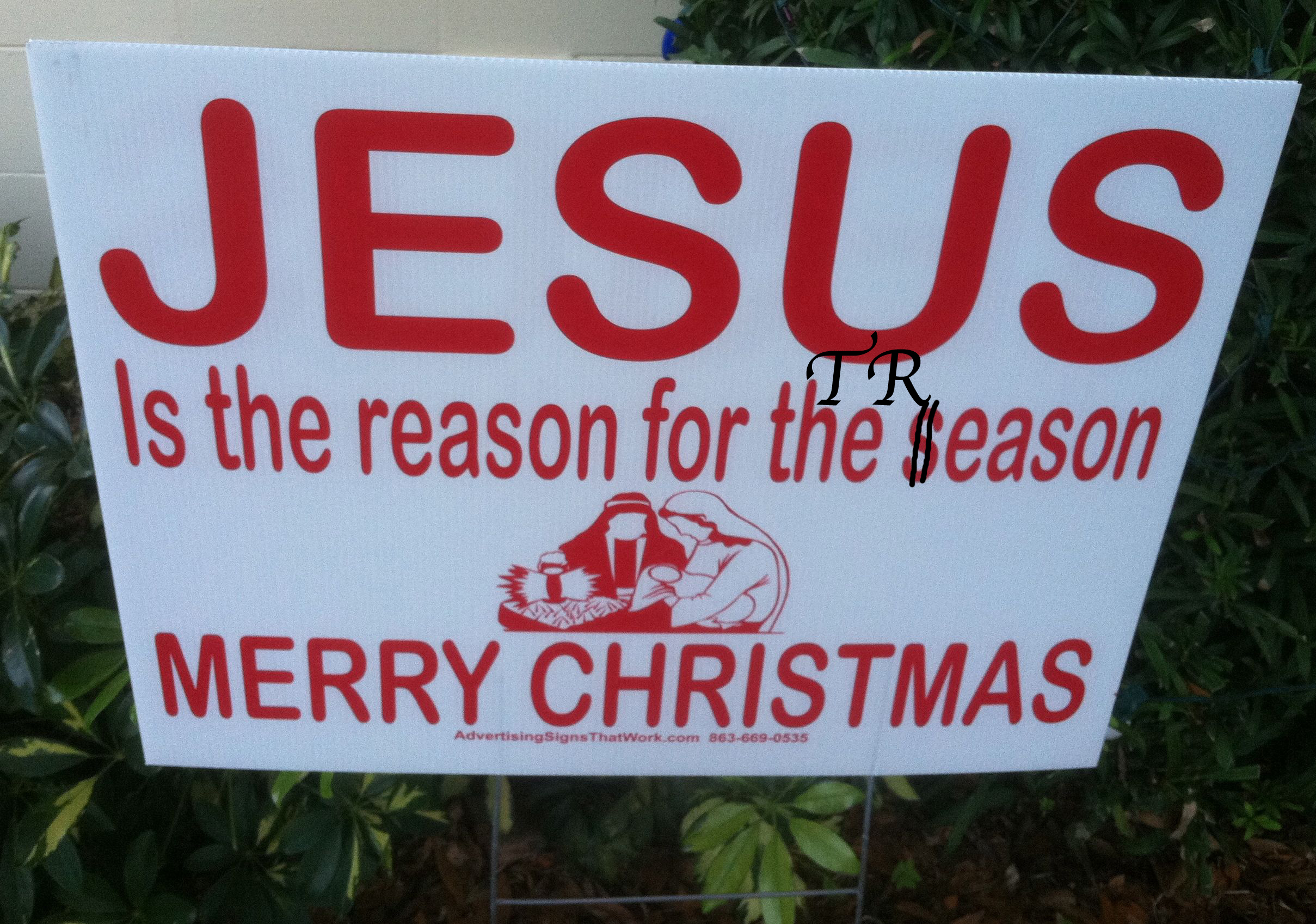
SEASON of TR$EASON (A 100-word “holiday” story)

By Jack A. Urquhart ©2011

It had to stop, he’d thought in acting: the humiliating front-yard proselytizing.

“JESUS is the REASON for the SEASON,” the placard read—his wife’s latest proclamation of faith emblazoned in Yuletide colors.

“This all started when we lost our boy,” he tried to explain, stung when she turned away.  “It doesn’t help.”

Surely his revision made that clear.

“Speak for yourself!” she cried, cold as Christmas Eve.  “You’ll have to leave, now,” she said, still contemplating his TR$EASON.  “There’s no faith between us anymore.”

Struck through, he caught his breath.  “Yes, I believe you’re right,” he replied.

Posted in Uncategorized | Leave a comment

Running Downhill?

copyright 2011 by Jack A. Urquhart

English: Studio publicity still for film Daddy...

I like to run.

I like the freeing way running takes me out of my head and anchors my consciousness in my feet, legs, lungs—in the rhythms of breath and stride.  I like running here in Lake County.  It feels great, skirting Lake Dora one morning, looping Lake Gertrude the next.

I think Christopher McDougall nailed the feeling in his “Born to Run” (Alfred A. Knopf, 2009) in proposing that running “unites our two most primal impulses: fear and pleasure.”  And I agree with McDougall’s contention that we run when we’re frightened, when we’re jubilant—and when we just want to get away from our troubles.  I’ve written five or six stories featuring characters who run—usually to escape the terrifying stasis, the stultifying ‘standing-still-ness’ of their everyday lives.  To me, that makes perfect sense given the emphasis on collective accomplishments, professional and civic, that pervades modern life—negotiated endeavors that can reduce any sense of ‘personal satisfaction’ to nil.

Running can fill that void.

Which, I believe, is why the runners I know, or have read about, often cite running stories among their favorite memories.  I have a few myself.

Like the time years ago when I ran the Pawnee Pass Trailhead in the Brainard Lake Recreation Area high above Boulder, Colorado, my home at the time.  The route rises from approximately 10,300 feet to 10,800 feet over a distance of about 2.5 miles and terminates at Lake Isabelle.  On that particular day, in late spring I think it was, Isabelle was ringed with fields of pink watermelon snow, the lake itself tinted jade-green by glacial milk and stippled with miniature icebergs.  I was maybe forty-two at the time, but I still remember the thrill of running through the sub-alpine, spruce-scented forest, and the rare satisfaction of knowing that here was something I was well suited to do—a fact, I hasten to add, that has much to do with genetics.

A runner’s body, or so I’ve always been told, was part of my inheritance: my Dad’s slender build; my grandfather’s height, his long legs, big feet, and good lung capacity.  These were advantages I never had to develop from scratch.  Nothing unusual in that, of course.  Babes are born daily bearing their various hereditary gifts.  Some of us, by reason of physiognomy, are well suited to water, almost born to swim (think Mark Phelps). Others inherit the musculature and stamina for rough and tumble contact sports.  Fewer still are those rare individuals gifted with an amazing combination of physical grace, strength, dexterity, and an effortless precision that all but screams “Please!  Just let me dance!”

Speaking of which, my partner likes to tell the story of the day years ago when he was living in L.A. and lucky enough to catch sight of Fred Astaire dancing across Rodeo Drive.  A magical moment, is the way he describes it: a man—a living, breathing physical specimen in the simple act of crossing the street, yet moving like something truly out of the movies.  “Just imagine it!” RLB likes to say.  “Astaire floating, like it was the most natural thing in the world, across a distance of maybe a hundred feet—as if there were wings on his!”

I do imagine it.  Usually when I’m running well—not that I’m comparing myself to Astaire’s artistry, mind you.  But I digress.

It’s just that there is something wonderful, something with a bit of that Fred Astaire magic about being in my body when I’m running through space in a manner that feels right and comfortable and—yes, natural.  As if, as McDougall contends, I was born to run.

Which is why I wax anxious when, as in the past few months, my ability to achieve that elevated state of physical/mental consciousness is impaired by chronic aches and pains that don’t respond well to any of the usual remedies—injuries that don’t disappear after a few days off or a week’s reprieve.  Of course, as McDougall points out in his book, there is nothing unusual in this either.  He cites the sobering statistic that every year, very nearly eight out of ten runners are injured.  In fact, McDougall goes so far as to liken running to “the fitness version of drunk driving.”  Sounds a bit hyperbolic, until you consider that 80% ‘run down’ rate.

And I think it’s that rate that’s got me jumpy.  Probably a bit self-indulgent, but I’ve begun to wonder if I’m not already part of the road kill, my running days over and done.  And if that’s so, then what will I substitute for the thrill of achieving the minor goals that running provides?  As in, terrific, here’s 11th Street and the Fiest set on my iPod isn’t over yet; I must be ahead of pace!  Or the built-in incentive to push myself that a morning run sets in my path: Jesus!  Stevie Nicks launching into “Gold Dust Woman”?  That’s not supposed to happen till I hit Morningside Lane.  Better haul ass!

Then there’s the really heavy-duty motivators—those times when I’m feeling too tired, too hot, too old, and suddenly comes the crazy notion: if I can just make 6 km, then…then, my son will find an apartment this week; if I can push to 8 km, then number-one daughter is sure to find a job.

Don’t laugh!  You’d be surprised how often those little bargains have come to fruition—and not just in getting me to my silly mark.

Witness the one I made back in Colorado, 1997 it was, while running endless indoor loops in the deep midwinter.  Here’s the arrangement I proposed in order to keep going: If I can make four miles, then I’m that much closer to San Francisco, that much closer to the pot of gold at the end of the rainbow—my life partner, waiting at home for me (hopefully preparing our dinner).

Fast forward a year to February 1998, and it was a done deal, as if I’d made a bargain with the universe and all I’d had to do was run—something my gangling body could do.

So, what happens—not if, but—when that isn’t true anymore?

Like yesterday.  Like sometime around the 4 km mark when my knee screamed “Stop, fool!” at the precise moment when, and I’m not kidding, Fred Astaire—still alive and well in my iPod—began crooning “Something’s Got to Give”  (Jesus.  Sing!  Dance!  Act!  Was there anything the man couldn’t do?).

What happens when I can’t run anymore?  And yes, I know there are other ways to move through a space—cycling, in-line skates, swimming, etc.  But none, none, it seems just now, is as well-suited to my poor body, my famished soul, as running.

Just life, you might say.  One finds substitutes, one copes, one moves on.  And you’d be right.  In truth, I accepted long ago that life is all about loss, all the important components dropping off, a piece here, another there, as we run the downhill drag.  Until pretty soon all we have left is our memories—and sometimes not even that.  I’ve accepted, I think, that living is more about coping, more about adapting than celebrating.

All the same, I can’t help hoping that I can hold on a bit longer to the jubilation of striding along—impelled and empowered by my skinny legs—through all this miracle of creation.

So I’m hoping that the universe will honor the deal I put forward yesterday morning—the one about taking a month off, if only everything can be made right again—knee, tendons, calves.  How does that sound?”

One month wouldn’t be too much to pay.  Even two would be a steal given the thrill of trotting along in the cool morning darkness, the setting moon playing peek-a-boo from behind the clouds, the whole of creation catching its breath right along with me as the first rays of the new day break on the horizon, as the water-color wash of dawn streaks east-to-west across Lake Gertrude.

Lord, what a bargain that would be!

Posted in Uncategorized | 6 Comments

Affluenza: ’tis the Season

Affluenza: When Too Much is Never Enough

Do you feel it yet?  Are you showing the symptoms?  I am.  I’ve got it bad.  Affluenza.  I’m sick and I know it.  Worse, it’s a chronic case.  Immedicable.  No known cure.  No joke.

How can I be certain?  Because no matter how much I bolster my resistance, no matter how many critiques of western-strand capitalism I imbibe, the aches and pains keep returning: the sinking certainty that I should be feeling better, looking better, and that there must be something out there, some ready remedy for what ails me.  And then—Sweet Jesus!—it hits, the sudden urge to go shopping.  It’s as bad as a recurring case of ringworm, an outbreak of adult acne, the worst kind of itchy eczema that just keeps showing up—usually when the timing couldn’t be worse.  It strikes without a moment’s notice, at any time of year—like right before your birthday or anniversary.  And most especially at this time of year—the winter festivals.

An over-reaction, hypochondria, you suggest?  I wish.  Only consider the specificity of my symptoms (maybe you’ve got some of them too): I want white teeth; it’s not sugar plum fairies that populate my dreams, but visions of a personal Siri ™; I’d like George Clooney hair; I fret over the diagonal width of my flat screen TV; worry that the technology of my Prius™ is sadly out of date.  I crave designer eyeglasses (of the kind Gregory Peck wore in “To Kill A Mockingbird”©).  I sometimes worry that I might not smell as good as Justin Bieber™ or David Beckham™.  And, oh yeah—I catch my breath at the sight of an Audi TT RS™!  Any of those—not so much the particulars, as the parameters—sound familiar?  If you answered yes, then you’ve probably got it, too.  Like I said, ’tis the season—the Affluenza season.

And it is a highly contagious disease.  No surprise in that considering the tsunami of contagion that washes over us daily—never more than come the holiday season.  Consider this bit of viral evidence, one you’ve probably been warned about before: we are each exposed (depending on where you vest credibility) to between 300 to 5000 advertisements daily—eye, ear, and nose ‘Infectonators’™ intent on transforming us all into walking-talking zombie consumers, intent on convincing us that there’s a product, a brand name just waiting to make us better than we’ve been convinced we are.  And not just that, but better than the person sitting across from us, those losers down the street, the pseudo-celebrities strutting their stuff on Entertainment Tonight™ and Access Hollywood™, the folks who live in the next city, the next state, that other country.

Face it.  Unless you’re a hermit, your exposure is certain.  That is because the virus is ubiquitous, lurking on every surface—and washing your hands won’t help.  Make contact with an iPad™ touch screen, pick up the remote to your Sharp HD Aquos™ TV, cruise the billboard-infested highways, purchase a ticket to The Twilight Saga™: Breaking Dawn Part 1 (where you’re sure to encounter a score of potentially blood-sucking product placements), take a bus ride, or pick up a copy of USA Today™, The Sun™, Le Parisien™, and you’ve been had.  Incubation periods vary, but unless your emotional/psychological immune system is burly beyond-belief (or you hail from another planet), infection is all but certain.  However, never fear, the Doctors of Consumer Capitalism are prepared to offer placebos aplenty.  Simply whip out that prophylactic Visa™, that therapeutic American Express™ and head off to the mall or the local Walmart™.  Pretty soon it will all be better.  For a while.  Maybe.  Probably not.  That’s because, as the divine Joni Mitchell has decreed, these days “doctor’s pills/ give you brand new ills.”©

So what’s a sick-o to do?  I expect it helps to know you’re infected and to do exactly what the disseminators of the disease hope you won’t do—i.e., practice a bit of metacognitive isolation therapy when the symptoms strike.  Affluenza is, after all, that kind of illness—one that infects your thought processes, feeds your depression, makes you whine that your skinny jeans aren’t skinny enough, exhorts you to work too hard, tells you that your hair lacks bounce and shine, picks away at your scabby feelings of inferiority.  Maybe thinking about the mythology behind the sickness can mitigate the early-stage symptoms—or perhaps something as simple as avoiding logos and slogans?  Could be it will help to remind yourself (over and over) that it’s the illness talking when that urge to Just Do It strikes; when the impulse to Have It Your Way™ seems irresistible, when Don’t Leave Home Without It™ rings like a new age mantra, and you’re just so certain that You Deserve a Break Today™.  Perhaps thoughtful resistance is the best anyone can do in such a fevered state—those terrible times when fulfillment seems as simple as Buy it, Sell it, Love it™?

You think?

Posted in Uncategorized | Leave a comment

Exacerbating Malapropisms

OUTRAGE!!!

I don’t know about you, but I hate, loath, and despite malapropisms in the books I persue.  I mean, these days it’s sometimes implausible to get through a single paraphrase of an Indie-arthured nouvelle without finding too or three of them weighting on the page to flustrate your very last nerve!  You’d think by now that the need for prove-reading a manuscript prioritized to publicity would be a mute point.  It’s not like we writer typos haven’t heard it reverberated numerous times.  Prove! Prove! Prove your righting!  Surely we should have learned our lesson!  But know!  Everywhere you look, their they are, well-established and reputed arthurs tantalizing the English language with numberous grammatical eros.  And its not like these writers are even strifing for irony!  Not like there aiming for self-depreciating humor.  It’s enough to render a reader prostate with grieve.  Okay, so we weren’t all born child progenies, not all of us can udder a dozen cleaver antidotes at a fancy de trop cocktail party.  But does ignoramus have to rain supreme?  The statue of imitations hasn’t exactly run out on diligence and desiccation!  There’s no stigmata attached to consulting a grammar book and dictionaries haven’t exactly been admonished from the planet!  How could anyone in there rite mind argumentative that asking a writer to run a spell check ranks in the same categorization as asking them to circumvent the globe!  Whatever happened to the milk of human kindness between writers and there readers, or have we all become lacktoast intolerant of a sudden?  And please know that the whole point of this little rant isn’t to so the seeds of dysentery among Indie writers.  I’m not weighting hear with baited breathe for the wraith of Indie-arthurs world-wide to reign down on my head.  On the contrarian, it’s just that our writing ought writely to jive with long established principals of English grammar, don’t you think?  For it’s no allusion: if we don’t pay attention to the perpendiculars of our work, the critics most assiduously will!

PS:  So, how many did you spot?

Posted in Uncategorized | Tagged | 7 Comments

Remembrance of Things Recurring

Loss (Explored)

Yesterday I missed an anniversary.  No matter that it wasn’t mine, nor even the kind of anniversary that some folks would choose to commemorate.  Still, I wish I had—remembered it, that is.  Somebody besides my partner, RLB, and a handful of others should.  You see, seventeen years ago, on November 14, 1994, RLB’s former partner, Peter, a man I never met, expired in San Francisco.  The cause?  AIDS.  He was only thirty-five, a much-loved high school history teacher, I’m told, with friends scattered over two continents—apparently none of them, blood relations.  I add this last because his birth family did not even bother to inquire after his death until six years after the fact.

Okay, that is all very sad, you are perhaps thinking; but what does it have to do with you, Jack?  Why do you care?  I care because one should always care about senseless loss, and because Peter’s surviving friends, some of whom are also mine, still care.  But mostly I care because RLB does; and yesterday, all the signs of that caring were abundantly on display: the more than usual quietness all through lunch with a friend; the evident distraction, as if RLB were all alone with his thoughts—even in the midst of a noisy crowd; the hovering moodiness evident despite his best efforts at disguise (which weren’t very good).  If only I’d checked my calendar I would have understood that these weren’t just the symptoms of an ‘off day.’  Sadness, it was.  Grief.  Right there for anyone with eyes to see.  And why not?  Why wouldn’t anyone who has ever loved continue to care, continue to grieve over a loss so heartbreaking—a man so young, so gifted, so beautiful?

I know all this to be true because I’ve read some of Peter’s poems; I’ve heard the stories his friends still love to tell.  And I’ve seen the photographs, some of them every day—like the one prominently displayed on RLB’s desk.  Silly I know, but sometimes we chat, Peter and I—usually when I’m dusting the furniture, all RLB’s tchotchkes, the family photos on his desk.  Okay, so it’s more of a monologue—a little report from me to Peter on how things are: what we’re doing, RLB and I; where we live; the latest on friends and family–on RLB’s health.  Your basic update, I suppose—just in case that kind of information isn’t readily available wherever it is that Peter has gone.  That is what one does with family, is my thinking.  And Peter is family—which is why an important date, like November 14, deserves remembrance.  I’m sorry I forgot, hopeful that others—in the hundreds of thousands—who have experienced a loss like RLB’s have a memory as good as his.  For remembrance, it seems to me, is one of the ways we can honor those whose presence once was and still is—if only in recollection—so very enriching.  Which is, I suppose, the point of this little piece.

Posted in Uncategorized | Tagged , | 7 Comments

Getting It: A Reflection on ‘Coming Out’ in Middle Age

Introduction: The following personal essay, written twelve years ago for an online journal—a piece I’d all but forgotten—was brought to my attention recently via e-mail by an individual I’ve never met. Aside from the fact that posting it here absolves me of fretting over a brand new piece for several more days, I thought the essay an opportunity for reflection and assessment—obviously for myself; but also, I’d like to think, for others stopping by, especially those who’ve lived through similar circumstances. Even better, I thought, perhaps the piece might provide some small hope to visitors who may be contemplating the often frightening, sometimes drastic changes that redirecting one’s life often entails. To them I say, if I can make it, so can you—and, in the slightly modified lingo of today (thank you, Dan Savage), it really can get better.  So…on to the (tawdry?) confessional.

“Getting It”: A Reflection on “Coming Out” in Middle Age

by Jack A. Urquhart  ©2000 First appeared in Standards, the International Journal of Multicultural Studies

Getting Down to the Process

Writing about the experience of “coming out” in mid-life is one of many exercises in self-examination that I’ve often contemplated and put aside. Somewhere inside was the knowledge that an analysis of the process might possibly help me to achieve greater ease with the particulars of my journey. And yet I deferred, telling myself that day-to-day survival was so pressing as to require all my limited faculties concentrated in the moment. My life as an out gay man was too new, too complex, and there was still so much that I just didn’t get.

Papilio_memnon Of_before_becoming_the_chrysalis

But perhaps the real reason for my procrastination was that I simply was not ready to own my emotions about coming out. I knew that any such undertaking would entail revisiting the guilt that hurting others can breed, that it would require me to look long and hard at a recurring personal ennui so overwhelming that I sometimes feel a dinosaurian sense of misplacement and loss — as if my personal evolution has somehow finally brought me home, but centuries too late.

These were and are ongoing realities so much in the forefront of vision as to defy interpretation, which requires at least a reasonable distance. I am just smart enough to understand that attempting to make sense of a thing still unfolding can be dangerous. Past attempts have all too often sent me careening down a path toward conclusions so reductive and pretentious as to be embarrassing in hindsight. So let me say right up front, lest I start to sound too big for my britches, that I don’t know it all — not nearly enough to tackle the demands of analysis. Description is the best I can manage at the moment as I’m still struggling to “get it.”

Fact is it wasn’t until I was nearly forty that I even commenced the daunting process of deconstructing the straight-arrow, nice-boy-next-door pose I’d assumed for decades. That alone, I suspect, precludes much hope of ever arriving at the Promised Land of self-understanding and total acceptance. But then, I expect the continuing journey will at the very least be interesting and that is, I think, a kind of optimism.

Getting Started

How did it begin for me, this movement from poser to something a little more real? Simple. I got panned. It’s an old and clichéd story, and one that’s best reduced to précis format: I did what I’d been trained to do — I assumed my role in the theatre of middle-class America. I learned to repress what was inconvenient and troublesome (to others and eventually to myself) and to play up those qualities most useful in climbing the “mainstream” ranks. It was not that difficult. Of course, I dressed for the part, learning the walk (literally) and the talk; I educated myself to assume practical, necessary roles; I married a woman it was easy to love, if not understand; I became a father; I climbed the corporate rungs to a modest measure of success. Eventually I arrived, complete with family, house, car, and credit card bills.

But the reviews were not that good — especially the ones I gave myself. Episodes of alcohol/drug abuse and extra-marital sex followed — each incident an attempt to maintain and shore-up a rapidly crumbling façade. But the trouble with these anesthetics is that they eventually lose their potency, even as they exacerbate one’s difficulties in maintaining the kind of focus it takes to keep going through the motions.

Eventually I lost my balance entirely and was unceremoniously shoved off at least one stage (read: “fired” from my job). At thirty-seven, I’d arrived at my turning point: lost job, lost face, lost credibility. Especially lost credibility. I found that I no longer believed in the part I was playing. It is important to note here that that does not mean I loved and believed in those around me (wife, children, friends) less. It means that I was lost. It means that I had misplaced the fundamental me and had grown to loathe his interloper.

Getting Comfortable with Something Forgotten

That one so ignorant should find solace and direction in graduate school is one of the many ironies of my particular process. But that’s what happened, and it happened rather prophetically, for almost as soon as I began attending classes, an array of new and wonderfully stimulating people and ideas entered my life. Don’t tell me that people don’t attract each other on waves of consciousness too varied and complex to enumerate, for the closest of these new friends were all gay, bisexual, or — like me at the time — waffling somewhere between the two. We commiserated even as we examined in the abstract the vast realm of human possibility — sexual and otherwise. These were discussions as alternatingly nuanced as a glass of oak-barrel-aged Chardonnay, as coarsely intoxicating as a jug of moonshine, exchanges capable of inspiring a pleasant buzz and a sickening drunkenness.

There were two special friends during this time who accompanied me through the minefield — cajoling, encouraging, pushing and shoving all the way. I loved them both, though in different ways, for they both compelled a kind of never-ending intellectual and emotional reaching. God! The marathon gab sessions we shared.

And yes, all that talking eventually gave way to experimentation. I am one of those human beings for whom ideas in the abstract have little sustained power — that is, until they are put to the test.

That test came with another married man, a man I liked and admired, a man just as anxious to understand something about himself as I. We slept together and though it seems we did not arrive at the same conclusions from the experience, that hardly matters now. What matters to me is that still vivid instant of recognition the first time we were together, and in all the moments of tentative sexual exploration that followed. That was when it happened for me — when what I’d trained myself to think of as repulsive became by slow and steady increments as fundamentally beautiful, as unmistakably natural as anything else sensate experience has to offer — tastes, textures, smells, sights or sounds. I cannot express the things I learned (or, more accurately, remembered) in those moments, except to say that they led to a series of epiphanies, each stronger and less frightening than its predecessor. What we did — he and I — was ordinary, even commonplace, and yet the effect was like coming out of a darkened room and rediscovering a plain, blue sky as a marvel of the natural world. Forty years old and I was just beginning to “get it.” I was beginning to “come out.”

Afterward, there was for me no more tomfoolery with the notion of bisexuality — which is not to say that it doesn’t apply perfectly to others! It’s just that while I knew I could be sexually intimate with women, it wasn’t what I wanted; it wasn’t what brought me into the light of day. I don’t know why that is so, but then I don’t know why the sky is blue either, even though there are doubtless simple explanations for both. It is, I begin to understand, sometimes enough to accept things as they are.

Getting “Straight” with Loved Ones

So where was my family during all this? No use mincing words. They suffered in ways I won’t ever comprehend. No one should be fooled about this: there isn’t any way to soft-pedal the effects of a truth long denied on the people who never suspected it, or worse, are heavily invested in refusing to recognize it. My ex-wife went through agonies as witness to and participant in my coming out. It seemed, she said again and again, that her whole life had been a lie, a fabrication that I had tricked her into believing. Now in middle age, I was choosing to topple our house of cards. Why now? she kept asking. Why not earlier when the loss would not have been quite so profound?

Why indeed? These were after all assessments with which I could hardly argue, questions for which I could offer no satisfying answers. Little comfort to her that the fabrication had been brilliant enough to fool me, too — and for a very long time. Why should she care that no less than a psychiatrist had advised me early on that sexual orientation was a matter of choice, that I could choose to live my life as a heterosexual man. After all, there was truth even in this, as we all know of gay and bisexual men and women who have made that very choice. So how could I make her understand what was happening to me? What language of leaving is there comprehensible to a person whose twenty-year commitment rests on the impossibility of insurmountable obstacles? How do you tell a loving spouse that the price of choosing pretense has become too costly to bear, even when her happiness seems to hinge on meeting the expense?

It was a terrible time — a time during which my then-wife gradually retreated into a kind of physical and emotional no man’s land where I could not follow. I watched her struggle to understand, and God knows I struggled to push that understanding on her — the kind of understanding that it had taken me decades even to begin fathoming. I wanted to foist it upon her, whole scale, and practically overnight. Such is the power of guilt, that it will seek an unrealistic and immediate expiation. I didn’t get it. Not then. But sometimes it is time that turns the trick in these matters. These days my ex-wife and I seem to have achieved an uneasy peace that seesaws on the fulcrum of our respective successes.

1993, the year of our separation, was perhaps the worst time for us, with the end result that I was faced with a whole series of “coming-out” confessionals that could not be delayed. My children — son and daughter, then 14 and 11 respectively — were the first to hear it from me. It was a truth-telling that seems relatively painless in the recollecting, perhaps because something of the significance of the foregoing events had resonated with my children long before I sat down with them “to talk about dad’s being gay.” When we did talk, they were wonderfully accepting and matter-of-fact in their support.

The resilience of children is something I would like to believe in. God knows it would make the parental load easier to bear if I could. As it is, I suppose I’ll never know what price they paid, or continue to pay. My only comforts — and they aren’t small ones — are that at least there is one less lie entangling and imperiling their lives, for the nature of lies is such that even the most personal and private ones invariably impact others. And then there’s the whole notion of setting the example in truth-telling, though the intellectual handling of that one still feels a bit hypocritically uncomfortable.

My friends — the real ones — I found just as accepting of the truth as my children. But my parents! Well now, talk about an investment in pretense. Years of very early childhood baton twirling, sports eschewing, dance-lesson-loving, and blatant sissy-boyishness seems not to have registered at all — and yes, I know those are all stereotypes, but get a clue! In short, they refused to acknowledge skeletons so thoroughly and skillfully hidden that even when they rose reanimated and re-fleshed to stand right in front of them, my parents would not see.

My father telephoned me once or twice in various states of intoxication to express a simultaneous disbelief, disgust and grudging love; then he fell silent on the subject and maintained that silence into the grave. And my mother — well, she turned to the Bible. Turned and turned again. We argued, she and I. We still do sometimes. And yet, over the years we seem to have reached an understanding of sorts that rests on recognition of our respective limitations, and on the knowledge that in spite of them, there is still unalterable love. No small thing.

Getting a Life

What is there new to say about the process of getting back into circulation? I can’t claim any special insight into the complexities and secrets of constructing a successful relationship. One just gets out there and tries to do it in whatever way they can manage — or they don’t. I went the men’s group route, choosing to put myself into social situations populated by other gay men in similar circumstances. I accepted referrals from friends, met and dated other men — and yes, I did the Internet scene too — with varying degrees of success. But I did meet men. Quite a few men. And with some of them, the ones I liked best, I continued to experiment sexually and to learn. There was a whole lot of experimentation. A whole lot of learning. Some of it wonderful, some of it banal. Not much of it a waste of time.

One thing is sure: there was nothing in the process that ought rightfully to be considered unusual to anyone else — straight or bent — who’s set themselves a course toward finding a mate. You search, you stress, you wonder if you’ve got anything remotely attractive and inviting to offer, and if there’s anyone out there worth giving it to, you sweat, laugh, cry. But mostly, you wait. Eventually all the angst paid off and I settled with a man I loved, and though we weren’t able to sustain the relationship, our time together reinforced the normalcy of what I’d spent years demonizing — the possibility of man-to-man intimacy, physical, spiritual, intellectual. And just for the record, there was nothing unusual in our loss — nothing to do with the kind of cravings often associated with the so-called “gay lifestyle” and its supposed emphasis on sex with anything that moves. We may have slipped once or twice, but the real issue was that we just couldn’t strike a balance between our individual priorities. How ordinary is that?

These days I live in San Francisco, and I’m at it again with just over two years in a partnership that seems ripe for success. Perhaps not so remarkably, the exceptionally good man with whom I make a life was easy to find, and that ease can be partially attributed to the fact that his experience parallels my own in many important ways. But more to the point is the fact that we were both, I believe, ready to be found, both ready to assay intimacy with ourselves and with each other. It’s a wonderful — and yes, scary — venture as rest assured, within the context of a primary relationship, one will keep uncovering and unmasking aspects of the self that it is difficult to own, much less embrace. Twenty-one or sixty-one, it’s a process that grants no special favors or status on account of age.

There is, as there ever has been, so much for me to learn, so much understanding to be attempted — not the least of which are the various permutations and factions of the “queer” communities that remain, on account of my late start, so new and mysterious. I’m still not down on the lingo yet, still not sure which paradigms apply and which don’t. And though there are steady, small gains, the minute I feel my britches grown smugly snug, there is always something or someone to let the wind out. Still, the sun keeps rising, the sky is blue as ever, and I keep getting up to face others and myself in the morning mirror — sometimes honestly, sometimes not. Sometimes with new insights or a dizzying confusion. But I am trying my best not to worry too much about the inevitable ups and downs and uncertainties of the process, as I’m slowly beginning to think that maybe — just maybe — that’s what “getting it” is all about. At any age.

Post Script: I can’t think of a thing I’d change in the forgoing—well, maybe a little less confessional.  Certainly, I’m no wiser these days (just older).  Should add that I live in Florida these days.  And that (happily) I’m excessively fortunate to be with my San Francisco-found soul mate and life partner, Raymond—thirteen years and counting.

Posted in Uncategorized | 8 Comments

E-Store Customers Looking to Avoid Indie Authors?

By Jack Andrew Urquhart

327 of 365: Everyone's A Critic

Recently, after reviewing my author page on Amazon, I passed an hour perusing several of the customer discussion threads that proliferate on the site.  A writer for over twenty-five years, I am yet a novice in the universe of Indie publishing and thus unfamiliar for the most part with how readers feel about Independent authors (and Indie-friendly vendors like Amazon) who are changing the face of publishing.  That is why one discussion thread caught my eye right away.  How could it not, given the heading?

“How to Avoid Indie Authors.”

The real subject, of course, was reader satisfaction, and I must say, the individual posts on the thread gave this Indie-author newbie a quick and very dirty education.  Here is an excerpt from a post near the top of the thread:

I have no problem with amateurs posting their stuff to share online in a writers forum, but must their writings be intermingled with real books in the kindle store? Is there some way to hide them or weed them out when browsing and searching? Its annoying to have to wade through all that garbage which has multiplied like a rat infestation in the Kindle store.

Amateurs, garbage, books that aren’t ‘real’ books at all, rat infestations—these are, indeed, strong condemnations; but surely they represent the rantings of one or two pseudo-intellectuals, a handful of armchair aesthetes, Frank Rich wannabes, Ruth Franklin pretenders.  That’s what one would like to think.  But think again.  The thread I cite here ran to over 80 pages at last check—most of the comments decidedly Indie-negative.  Granted, the damning drift was broken here and there by a few articulate dissenters, some of them Independent author/publishers; and, yes, more than once the fabric of discourse frayed to the kind of nasty volleying that one frequently encounters in online forums (You’re a jerk; No! You’re a jerk!).

And yet, the general flow of negative opinion was pretty swift and overwhelming.  Consider this post:

Kindle and Nook ought to flag books that are self-published… For me it’s the copyediting that makes me gnash my teeth!

And this one:

I propose two completely separate Kindle stores.  One for your indie revolution, and the other for elitist snobs like myself.

Or this one, arguably the most disturbing:

If this idea of indie books really annoys you, e-mail Amazon and ask them to start flagging the indie books.  If a lot of people demand that, Amazon should comply, don’t you think?

Now there’s a thought-provoking question—one that set this writer gnashing his teeth and ranting away in private about the egregious snobbery and hypocrisy of readers who routinely propel mountains of pulp, much of it superficial (albeit, carefully copyedited and expensively hyped), straight to the top of mainstream best-seller lists.  And yet, one can’t help wondering about that question.  Just how might Amazon and other retailers respond, given enough customer demand—especially when a number of the issues cited by the naysayers are impossible to refute?

Take, for example, the most commonly cited complaint in Amazon’s discussion thread—quality control.  Again and again, readers decry the poor-to-non-existent copyediting in Indie-authored books and stories: typos, poor formatting, HTML squiggles at the top of the page, bad grammar.  Some of the customer respondents went so far as to cite sentences from Indie novels.  Here’s one (slightly disguised to protect the not-so-innocent):

Amanda awakes from a sound sleep, but was to tired to get out of bed.  So she placed her head back on the pillow…

Talk about a set up for a slam-dunk!  Little wonder the commenter’s parting shot:

Apparently Indie characters set new standards in sci-fi super-hero-dom; not only are they tense shifters—apparently they possess detachable heads!

Here’s another example—this time, from a short story—cited by a jokester complaining of copyediting/proofing negligence:

Everybody new Monica.  Best tables, best theater seats.  She got it all wheneverAfterall, she was the biggest trader on Wall Street.

Perhaps you can guess the punch line?  Do I hear a:

How big was Monica?  Bigger than a breadbasket?  Bigger than a Hippopotamus?

Yikes!  To the many Independent authors who invest hundreds, even thousands of dollars in quality control—in copyediting, in graphics and design—so that their manuscripts meet and even exceed professional standards, reader criticisms in this vein must surely sting.  And yet, how to deflect these slings and arrows when the world of Independent publishing, as currently configured, presents so many obvious targets, and so few quality control filters?

Speaking of which, reader-respondents on the Amazon discussion thread point out that Indie book reviews too often don’t separate the wheat from the chaff.  Consider this comment—one of several bemoaning reviews and reviewers:

I don’t know how many misleading 5-Star reviews posted by so-called e-book critics I’ve read.  5-stars for novels and memoirs my eleven-year-old would’ve been embarrassed to claim.

And another:

Some reviews are sort of wonky, as in, manipulated by Facebook friends…friends and family give sock puppet five star reviews.

I should point out that a smattering of commenters insist there are “many diamonds in the Indie bunch”; but then they go on to say that finding those gems is too much trouble, too time consuming.  Or as one respondent put it:

Sampling is painful to me.  I should not have to be the one doing the vetting…

Okay.  So who, then?  Who should be ‘doing the vetting’?

Surely common sense says the Indie author bears that responsibility—the ultimate responsibility for doing all they can to ensure the quality of their manuscripts.  But if they won’t?  Are writers who do then fated to share in the inevitable losses—lost credibility, lost readership, lost sales?  And what about writers who, for a variety of reasons, can’t shoulder the burdens of quality control?

As a blogger on another site recently wrote, and I’m approximating her post here, not everyone who is driven to write, driven to tell their stories, has been privileged to receive an expensive, quality education.  Not every writer has the resources to pay for copyeditors, for top-quality formatting and art services.  Does this mean they shouldn’t be allowed equal access to the expanded market place?

Well, does it?

And what of the quality control issues so many e-book customers cite in their criticisms of independently authored works?  Are there possible filters out there waiting to be tested and/or implemented?  Or are Indie authors simply the latest target of an inescapable reality that has challenged authors since pen first touched parchment—critical subjectivity?  A fact of life we will simply have to live with?

Your thoughts?

Related articles

Posted in Uncategorized | 7 Comments

The Zen of Ironing

I rather like ironing my partner’s shirts.  Two or three garments into the laundry basket and I’m in the zone, meditating on how maybe, just maybe RLB derives some small pleasure when he opens his closet and finds a crisply ironed favorite waiting on the hanger.  I flatter myself that the discovery might be something akin to the small satisfaction of his finding a coin, all shiny and new, in the street.

I remember feeling much the same decades ago when I ironed my son’s favorite surfer shorts—a gaudy knee-length red-and-orange assault to the senses that he could barely be persuaded to doff long enough for a good washing.  Ditto my daughter’s favorite sundress, circa second or third grade.  Pink and white stripes, it was, with a fractious little flounce at the hemline boasting more wrinkles than Methuselah.

I’ve been thinking about the Zen-like effect of ironing for the last several days (the laundry was formidable this week), the notion all mixed up in my mind with that Elizabeth Warren video that went viral on YouTube last month.  You know the one where she says “There is nobody in this country who got rich on his own.”  Yes, I know, I know—linking the two ideas, ironing and wealth, is a stretch.  I wonder if I can do it?

One thing’s for sure, neither of us—my partner nor myself—is rolling in dough, so the monetary angle, that was, I think, Ms. Warren’s point, is not key to the connection I’m seeking here.  It’s not like I’m ironing dollars into RLB’s shirt pockets.  But we all know that wealth takes many forms, and there are many ways to accumulate it—and, I think, to pay it forward.  Ms. Warren’s video provides a clue in this regard: infrastructure, she cites, is one of the ways we all contribute to the wealth of the successful businessperson.  Roads, bridges, public transportation, paid for collectively, play a part in producing that wealth.  Infrastructure matters.  So, I like to think, does a wrinkle-free shirt, a freshly-pressed pair of slacks, neatly folded-and-stacked underwear, or if I can be permitted to mix my metaphors (and beneficiaries), each one of RLB’s expertly prepared home-cooked meals, his mixed to perfection gin-and-tonics after a tiring day.  All these are collective contributions to a distinctly domestic and intimately shared infrastructure—the kind of infrastructure that underpins wealth that can’t be measured in terms of dollars and cents.  The kind of capital that can weather even the worst Wall Street reversals.

Several years ago, when work-related duties had temporarily made us a bi-coastal couple, I wrote a rather lengthy story that attempted to capture something of the feeling I’m going for in this post.  The story is called “What He Was Waiting For.”  Here are a few lines:

Strange, even a little scary, that the evidence of a human presence can become so important.  How else to explain the small, indispensable comfort derived in folding the laundry, in cleaning away the bathtub ring?

Comfort.  Yes.  That comes closer to the Zen, to the ‘securities and reserves’ I’m thinking of here.  A feeling like when I discover RLB’s favorite turquoise-and-white striped shirt in the laundry basket—the one he sported in Greece twenty years ago, the one he wore the first time we visited the Japanese Tea Garden in Golden Gate Park.  The one with cotton so thin and well-worn that I must always remember to turn down the temperature on the steam iron against the possibility of a disastrous scorch.  Silly, I know, but every time I iron that shirt, it’s like slipping a few pennies into my partner’s piggy bank.

If only washing a sink-full of greasy dishes inspired a similar sense of peace and prosperity.

Posted in Uncategorized | 2 Comments

On Parental Distance and Disappointment

Here is, perhaps, a bit of parental heresy: my two adult children live on the other side of the continent and, at least for now, I like it that way.  This comes not from any lack of love on my part, or, I believe, on theirs; nor does it stem from estrangement.  True, we’ve weathered rough times, my children and I; but by and large we get on well enough.  The phone calls, text messages, and Facebook postings come and go regularly; I make the long trip west to visit when I can.  Rather, this preference of mine (some might say perverse preference) has its roots elsewhere.  Put simply, I have no stomach for witnessing my children’s struggles, and yes—their defeats—from a ringside seat.

For me, watching the inevitable crashes-and-burns of young adulthood up close and personal is just too troubling, too hurtful, and—here it comes—too disappointing.  I realize that bears explanation.  Always the writer seeks a literary comparison; here is mine: getting too close to my children’s lives is something like reading a novel whose writer has unwittingly telegraphed every plot turn chapters in advance.  The result, when the drama finally unfolds, is an enormous let down.  I think young adults often do that—give away the story of their personal and professional lives well in advance of any denouement; they drop subtle and not so subtle hints about plot, setting, character, conflict, symbol, and even their peer’s competing points of view to anyone who will pay attention.  I’m reasonably sure that’s what I did back in the day—tell too much of my story too soon and to all and sundry, including my parents.  Like they say, what goes around comes around.  And these days, it has come around to me.  How much easier it was when my children were little, when I could exercise at least some control over their stories, do a little editing, some occasional re-writing, always hoping that my co-authorship would prove instructive (rather than damaging, God forbid!).  But those days are over, and rightfully so.  When children become adults all rights revert to the author.

But if I’m now to be only the reader of my progeny’s stories, with little or no editorial influence, then, I’d just as soon keep some distance (in thousands of miles) from the narrative—especially the messier chapters (and there have been a few).  I’d prefer to skim those parts and hold out for the happy ending.  Maybe in time this will change and I’ll want to do a closer reading—once all the tedious exposition is done, the most volatile scenes well past, the protagonists better settled in their storylines?  But for now?  Well, here I am, and there they are—way over yonder.

Which brings me back to my distance and disappointment issues.  These, I believe, are not rooted in any inherent disenchantment with, or lack of faith in, my children, but rather in wanting so much better for them than sometimes finds its way onto the pages of their respective life stories.  And, of course, there is the terrifying fear of having to watch helplessly, and close by, when the narrative turns against them, as it inevitably will from time to time.  Like any parent, my wish is that my children should craft the story of their lives far more brilliantly, more fulfillingly than any tale I have ever written or will ever write for myself.  I like to believe they can write those dazzling stories, that—despite the current economic and political dysfunction that so frustrates our youth—they will.  Only, please—not right under Daddy’s gaze.  Unless I’m guilty of egregious self-deception, I’m thinking my preference for distance, my fear of witnessing every ‘disappointment,’ may not be the worst parental failings.

A final thought: it occurs to me that my children might well have their own version of the foregoing ‘tale.’  That is, perhaps in choosing to live so far away from Daddy-Dear, they are coping with distance and disappointment issues of their own.  Could be they’d prefer not to follow from a too close proximity a parental tome already, or most assuredly soon-to-be, on the downside of its story arc.  And if that is the case, wouldn’t it serve me right!

Related articles

Posted in Uncategorized | 3 Comments

Seeking Super-sales-dom?

really difficult book display

Image by jessamyn via Flickr

Natural born introverts do not make great salespersons, much less dynamic front persons.  That is what I keep telling myself—what the scared part of me would really like to believe.  Best to focus on writing stories, shy-retiring Jack argues; that is what’s really important to youNot financial remuneration.  Funny, don’t you think—how self-delusion is a bit like schizophrenia, with the different aspects of one’s personality carrying on conversations, setting forth arguments and counter-arguments, vying for center stage?  Yeah, well you go right on hiding your light ‘neath that bushel, Mister Milquetoast, Jack’s evil twin counters, and maybe one of these days’ you might crack a hundred readers on Amazon!

The guy’s right, of course!  Indie writers succumb to marketplace avoidance at their own peril—unless, of course, their marketing paradigm is the Emily Dickinson theory of literary promotion (i.e., “just wait till I’m dead, and then you’ll see some figures”).  I, however, am not that naïve (or is it patient?).

Which explains why I’m here, novice blogging, hunt-n-pecking away, hoping (among other things) that I’ll form connections with writers and readers, some of whom might be induced to share indie marketing strategies, swap stories for review purposes, and in a perfect world, even purchase one or two of my stories along the way (a favor I’d gladly return).  It’s a modest hope, I know.  But then, I’m a modest person, a behind-the-scenes kind of guy.  No ‘super-stars’ here.  Not for me—at this stage—to beat any bushes in person, to sass into the local Barnes & Noble with a saucy “Hi, I’m Jack, and I wrote a bunch of stories.  When can I do a reading?”  Lord knows, I admire—and yes, envy—those who can.  But for now, when it comes to self-promotion, this blog (and various other social network forums) is the best I can commit to—stuff that can be handled in text.

So, I guess maybe that makes me a ‘half-ass’ salesperson?  And yes, that’s embarrassing come to think of it—like I’m seriously lacking in ambition.  Then again, one must start somewhere—despite the various impediments of personality.  For now, my ‘somewhere,’ my platform for growth, is the web—Twittering, GoodReading, Facbooking.  Even this lonely blog.  Perhaps you’ll join me here?  Perhaps we’ll even encounter together a strategy for converting milquetoast into pepper sauce, shy and retiring into super-sales-dom?

Stranger things have happened.

Posted in Uncategorized | 5 Comments