Book Review, George Saunders’ TENTH OF DECEMBER: In search of the deepest, dearest thing

By Jack A. Urquhart, ©2013  (1800 words)

TenthofDecemberCover“We left home, married, had children of our own, found the seeds of meanness blooming also within us.”

The foregoing line from “Sticks,” one of the dark (and darkly funny) morality tales in George Saunders’ new story collection, Tenth of December, exemplifies part of what captured and entranced this reader from page one.  I refer to the author’s uncanny ability to articulate the inchoate thoughts and feelings of the human mind, those innumerable little epiphanies that spark and flare and disappear—usually too quickly for most of us to grasp.  Such artistry is a wonder in itself.  But Saunders’ talents are even more wide-ranging—expansive enough, in fact, to envelope his little beacons in stories of spellbinding authority.

Of course, the ability to effect such storytelling wizardry has everything to do with Saunders’ mastery of language.  And such inventive language it is!  Each of the 10 stories in this latest collection unfolds rhythmically on the page, sometimes hip hopping to a broken, irregular beat, other times tripping to a jazzy meter.  Once Saunders enters the mind of his protagonist, the reader encounters whole pages alive with street savvy phrases, with hilarious and darkly imaginative neologisms.  This reader confesses that it was thrilling to witness how the author uses his formidable linguistic skills to conjure insights instantly recognizable, often in sentences powerful enough to bring the reader to a full stop on the page.

The line that opens this review from the collection’s shortest story is an excellent example.

“Sticks”—a little miracle in 387 words—spins a tale from a grown son’s memories of a father so repressed that his sole means of emotional expression was to construct stick figure tableaux on the front lawn.  In just two short paragraphs, Saunders captures a dreadful truth that those of us honest enough to fess up will surely recognize: the fear that our parents’ most onerous sins are deeply seeded within us, waiting to germinate, mature, and bear familiar fruit.

Cast of Characters

It is worth noting that throughout the collection, such insights as this spring from under-achieving minds, for Saunders doesn’t pull geniuses and superstars out of his magic hat.  Rather, he summons a cast of rank amateurs—sometimes outright losers—who put the full, unpolished range of human faults and foolishness on display.  Maybe it is because the author renders most of them with enough compassion to offset their blunderings that the reader wants to follow their stories.  Or maybe we tag along because these are characters who—as in all morality tales—want to be saved, even if they don’t know it; characters who struggle to discern the forces of good from those that are not.

In Saunders’ oeuvre, those forces include the dehumanizing provocations of the modern world.  His protagonists are men and women, boys and girls who rail awkwardly against social injustice and oppression, who struggle with domestic longings, and a pervasive sense of class angst—who do battle with the temptations and false idols of a capitalist culture.

It is no accident, then, that many of Saunders’ characters harbor formidable caches of anger—rage that is sometimes suppressed, other times released in bursts of cruel intolerance and violence.  And yet, it is heartening that now and then their rage is—at the last possible moment—diverted into unexpected acts of mercy and compassion.

“Victory Lap”

In the story, “Victory Lap,” Saunders alternates narrative perspectives between his winners and losers.  First, there is Alison, a popular 14-year-old girl whose aspirations (and self-esteem) soar high above her small-town surroundings.

“The local boys possessed a certain je ne sais quoi, which, tell the truth, she was not très crazy about, such as: actually named their own nuts…Did she consider herself special?  Oh, gosh, she didn’t know.  In the history of the world, many had been more special than her.  Helen Keller had been awesome…”

Next comes Kyle, a scrawny teen whose physical appearance is captured in two short sentences: “Poor thing.  He looked like a skeleton with a mullet.”  Yet behind the dorky exterior lurks a potent fury—one regularly stoked by his sadistically controlling parents and which the teen barely contains via a near constant internal litany of profanities.

“What was wrong with him?  Why couldn’t he be grateful for all that Mom and Dad did for him, instead of— Cornhole the ear-cunt.  Flake-fuck the pale vestige with a proddering dick-knee.”

Even so, there remains a tender spot in Kyle’s simmering heart for his attractive and popular neighbor.

Kyle’s heart was singing.  He’d always thought that was just a phrase.  Alison was like a national treasure.  In the dictionary under “beauty” there should be a picture of her in that jean skirt.  Although lately she didn’t seem to like him all that much.”

Finally, Saunders delivers an unnamed would-be murderer/rapist, who has, in his twisted imagination, carefully rehearsed the assault he will launch on his intended victim, Alison—right down to the opening lines of the attack.

“He had the speech down cold.  Had practiced it both in his head and on the recorder: Calm your heart, darling, I know you’re scared because you don’t know me yet and didn’t expect this today but give me a chance and you will see we will fly high.  See I am putting the knife right over here and I don’t expect I’ll have to use it, right?”

That the story’s climax is achieved by thwarting one act of violence with another says reams about how individual successes and failures can ameliorate or aggravate a personal sense of shame, feed or destroy our self worth—drive human beings for refuge into daydreams and fantasies that can, and often do, bloom in savagery.

“The Semplica Girl Diaries”
(Note: This review does not reveal the meaning of ‘Semplica Girls’ in order to preserve the story’s sci-fi surprise.)

In the unforgettable “The Semplica Girl Diaries,” Saunders produces a struggling middle-class father (trapped in a bureaucratic wasteland) who makes truncated entries in his journal.  Not surprisingly, his journal chronicles a world of shame, the kind of mortification that springs from not being able to give his children the consumeristic perks their peers enjoy:

Stood awhile watching, thinking, praying: Lord, give us more.  Give us enough.  Help us not fall behind peers.  Help us not, that is, fall further behind peers.  For kids’ sake.  Do not want them scarred by how far behind we are.

In another entry the narrator writes that he does “…not really like rich people, as they make us poor people feel dopey and inadequate.  Not that we are poor.  I would say we are middle.  We are very very lucky.  I know that.  But still, it is not right that rich people make us middle people feel dopey and inadequate.”

There is something perversely satisfying and simultaneously uncomfortable about stumbling upon a passage like the preceding.  I say satisfying because Saunders evokes precisely the kind of private reverie we humans, regardless of class status, have all entertained at one time or another; and it is strangely gratifying to discover that we are not alone in our insecurities.  As for discomfort, perhaps that springs from the recognition that our most secret yearnings are sometimes as ridiculous as they are pathetic.

Indeed, often the most arresting moments in Saunders’ stories are accompanied by discomfort.

“Tenth of December”

In the wonderful title story, for instance, which comes last in the collection, the reader encounters two characters whose internal thoughts bespeak such an abiding loneliness as to be embarrassingly familiar.  Familiar, that is, to anyone who in a moment of self-loathing has ever felt herself/himself a hopelessly lost soul.

Saunders identifies the story’s protagonists with a few, deftly worded sentences.  There is the boy, Robin, a chubby outsider “with unfortunate Prince Valiant bangs and cublike mannerisms” whose only friends are imaginary; and the terminally ill Eber, with his “bare white arms sticking out of his p.j. shirt…like an Auschwitz dude or sad confused grandpa.” 

Just as Robin’s description marks him the archetypal outsider, a target for adolescent bullying and ostracism, Eber’s physical depiction fits the mission he has embarked upon—namely, suicide (via hypothermia, of all things), a quest he undertakes to spare his wife Molly the strain of his prolonged illness.

Neither of these defeated characters makes a comfortable story companion.  And yet, once the two cross paths in the wilderness on a freezing winter day, the reader’s empathy begins to swing their way.  Gradually, we begin to care what happens to these oddballs, begin to hope that they will find a way to save each other.  It is a storyline that in less accomplished hands might easily have veered into cliché.  But Saunders steers well clear of trodden territory.  Rather, when he pulls his protagonists back from the brink, it is to make them face life’s harsh realities, its excruciating squalor and heart-rending splendor.

Indeed, the ‘life’ that Saunders envisions for all his protagonists seems always to retain just enough potential for good to make the plodding, painful journey worthwhile—even when ongoing social rejection seems likely, or when death is an imminent certainty.  That is because sometimes—in the midst of chaos, injustice, and the cruelties of birth and chance—the smallest act of generosity, of kindness, of acceptance, can forestall disaster and make a miracle.

Witness this passage from the conclusion of the title story:

“The kid…took Eber’s bloody hand gently.  Said he was sorry.  Sorry for being such a dope in the woods.  Sorry for running off.  He’d just been out of it.  Kind of scared and all.

Listen, Eber said hoarsely.  You did amazing.  You did perfect.  I’m here.  Who did that?

There.  That was something you could do.  The kid maybe felt better now?  He’d given the kid that?  That was a reason.  To stay around.  Wasn’t it?  Can’t console anyone if not around?  Can’t do squat if gone?…

Then: sirens.  Somehow: Molly.

He heard her in the entryway.  Mol, Molly, oh boy.  When they were first married they used to fight.  Say the most insane things.  Afterward, sometimes there would be tears.  Tears in bed?  And then they would— Molly pressing her hot wet face against his hot wet face.  They were sorry, they were saying with their bodies, they were accepting each other back, and that feeling, that feeling of being accepted back again and again, of someone’s affection for you expanding to encompass whatever new flawed thing had just manifested in you, that was the deepest, dearest thing he’d ever—”

Coda

One wonders after reading the 10 interludes in The Tenth of December if the human struggle to achieve salvation is as simple and as complex as Saunders seems to suggest—as facile as a single good and true revelation?  As arduous as discovering amidst the cacophonous, mind-numbing distractions of modern life the deepest, dearest thing?  A thing powerful enough to stop us midthought or midsentence?

Feats of magic that happen with marvelous regularity in these brilliant, heartbreakingly insightful stories.


 

Posted in Uncategorized | Tagged , , , , , | 2 Comments

My Forty-eight, by @JackAUrquhart

©2013 by Jack A. Urquhart (1354 words)

48 BallLately I have followed with interest, and no small regard, the various “When I was…” posts (also known as “My [insert number]” posts) that have been showing up on social media sites.  For those unfamiliar with these posts, they typically offer a biographical snap-shot of the author at a specific point in time, say at age 21, or 39, or 85, etc.  In most cases, the number explored (i.e., the specific age) is suggested by one author to another.

In every instance, I’ve admired the author’s courage in these mini bios, the sometimes brutal honesty evident in their retrospective self-assessments.  Each of the posts I’ve read has seemed a liberating endeavor, and, unless I’ve mistaken the prevailing tone in them, a cathartic one as well—so much so that I decided to give the exercise a try.

My number—or rather, the ‘age’ I’ve decided to explore—is self-selected, I should point out.  That is because, from jump street, I knew it would have to be 48—a milestone (in every sense of the word) I achieved in 1996.  Nothing else, I knew, would do for this project save my forty-eighth year.  So, to begin:

By 1996 I had been living in Colorado for nearly 18 years and was eking out a living as an adjunct instructor of rhetoric at the University of Colorado, Boulder (C.U.).  Barely two years divorced and out of the proverbial closet, I had endured over the previous many months the loss of a much-loved best friend, who as it happened was also my former wife, the forfeiture of our Boulder home, and, worst of all, the removal of my teenage children and ex-wife to another state.  Come ‘96, I was—at the scandalously tardy age of 48—a self-acknowledged homosexual (finally) and, for the first time in decades, desperately alone.

It didn’t help, of course, that I compared myself unfavorably to every male on the planet, or at least to those closest at hand—none more than Drew (not his real name), the man who had been my next-door neighbor during the last years of my heterosexual married life.

Drew was one of those gifted men who seemed predestined for success.  Certainly he was blessed with good looks, and though younger than I, more successful professionally than my lack of ambition would ever permit.  And he was positively, gloriously straight, not to mention happily married.  In fact, Drew seemed more effortlessly heterosexual than I had ever managed to mime in forty-odd years of concentrated effort.  For three of those years, I had observed Drew’s manly perfection across the dilapidated fence that separated my weedy backyard from his manicured, private Eden—all while experiencing the gradual failure of my marriage.

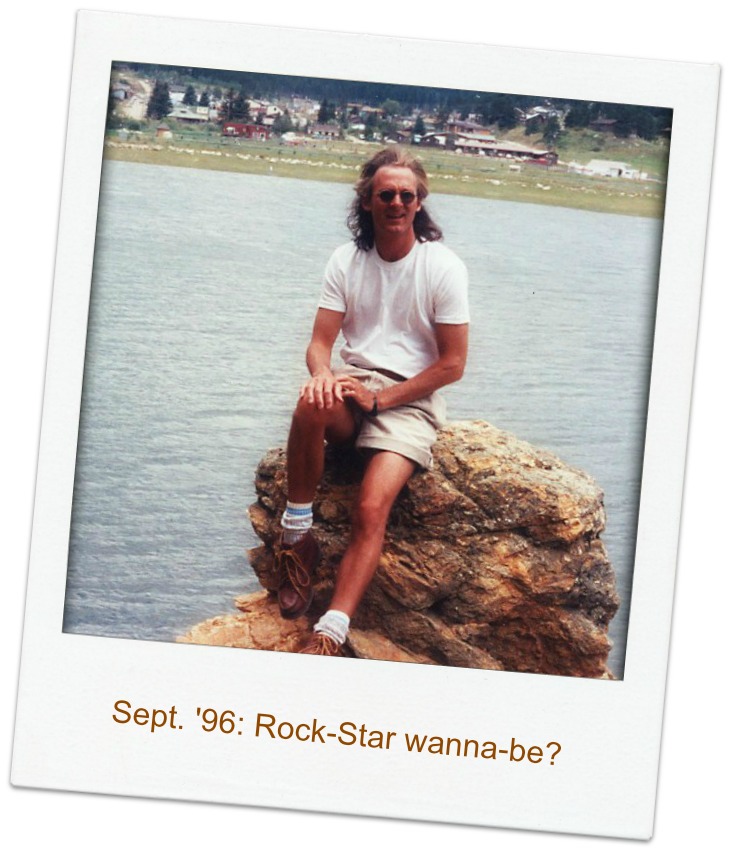
Jack2 at Nederland reservoirIn short, I began my 48th year a bit of a mess, a man lacking in the assets that seemed to matter most in my new out-of-the-closet environment. That is because, to borrow from Ms. Austen, “it is a truth universally acknowledged,” or so it appeared to me at the time, that quite a few gay men were in search of the B-Y-B; be it the quest for a casual hookup or a life partner, Beauty, Youth, and (financial) Bounty seemed the prevailing currencies—which meant that I was pretty much broke.  Barring a winning lottery ticket and/or the beneficence of a whiz-bang plastic surgeon, I couldn’t hope that my paltry “charms and allurements” would count for much in the market place.

Yet as gloomy as that sounds, I can truthfully say that even in the darkest days of that Rocky Mountain season, I remember knowing—a word I don’t use lightly here—that I would not remain solo, that despite a late start at more truthful living, I was bound to be partnered, meant to share my life, and that I would—absolutely would—find a good man.

To that end, I applied myself with perhaps more ambition and determination than at any time previous or since.  It was difficult work.  But I exerted myself.  I moved into temporary housing in another part of town and entered therapy.  An empathetic psychologist provided a short-term prescription for Prozac that helped to flatten my highs and lows (of which there were many).  With his encouragement, I made some changes: I cut off my passé Robert Plant-esque locks and upped the ante at the gym toward adding some little substance to my scrawny frame.  On the professional front, a C.U. colleague and I broke tentative new ground by collaborating on the design and instruction of a writing course entitled “Representations of Gays in the Media” that quickly filled to waitlist status.  Volunteer work at the Boulder County AIDS Project provided a more thorough awareness of the issues facing the gay community and offered the unexpected benefit of new friends.

And, risking the market place, I went looking for love.

With that goal in mind, I joined a local gay men’s social group—Mature Gay Men (MGM)—that held monthly potlucks in various locations around Boulder County.  It was a decision that, on a spring afternoon, led to one of happiest events of my 48th year.  All these years later, I still recall the magic of the day.

It was mild enough that May for outdoor gatherings even in the foothills of Boulder County where a late spring snow is not all that uncommon.  On the afternoon in question, the potluck was held at a private home that boasted a lovely Japanese garden.  Rick, the man who would shortly become my first long-term lover, accompanied me.  A total sweetheart, he was the kind of guy who made it his business to facilitate a newbie’s entrance into the strange new world of out-and-proud gay men.  To wit, as we eased our way through the crowd toward the reception table that afternoon, he devoted himself to making introductions—so many introductions that by the time we approached the table, my head was spinning with a bewildering array of new names and faces.  Perhaps you can imagine, then, the degree of shock, and, yes, confusion that flooded my senses when the handsome man at the table turning to greet me presented a familiar face.

As you’ve probably guessed, it was Drew.  And, no, I’m not making this up.  It really happened.  There he was in the flesh, my idol and my nemesis, only recently divorced himself it turned out, yet already in possession of a beautiful, young boyfriend  (B-Y-B scoffers, I rest my case!).  But the biggest eye-opener of the encounter was that Drew seemed every bit as surprised as I.

I don’t remember the substance of our conversation that afternoon, the things we said to each other, what expressions of astonishment we might have exchanged.  But I do remember our matching ear-to-ear grins, Drew’s and mine—as if we’d both received an unexpected, totally awesome gift.  And I remember feeling that something tremendously heartening had happened; something that seemed to bridge the gap between the rest of the world and me.  A sense of community, I think it was.  And happiness at the wonder of being alive and connected in ways previously unimagined.

Jack2 at 48Such intensity of feeling never lasts, of course.  But that doesn’t diminish the magic or the value of those oh-so rare moments.

In the months that followed, I clung to the memory of the rapport I’d felt that May afternoon—held on to it for dear life as I made a fledgling start at coupledom with Rick.  I was still 48 when we took an apartment together, bought furniture, gave and attended parties, played hosts to my children when they visited.  And though our union didn’t last, it was nevertheless lovely and sad, encouraging and disappointing in the way that most relationships are bound to be.  And oh-so worth it.  Because it strengthened my confidence, my resolve.

Our time together, Rick’s and mine, proved that I could—even at all of 48start anew; that I could forge a meaningful relationship, give and receive love, and do so in a manner that was appropriately fulfilling.  And, as much as that is ever possible with us human beings, truthful.

Posted in Uncategorized | Tagged , , , , , , , | 6 Comments

Ready, Aim, Fire! Gun Facts Pop Quiz, by @JackAUrquhart

Guns, guns, guns

1. The total number of nonmilitary firearms in the United States as of 2009 was:

a. 100 million
b. 150 million
c. 310 million
d. 500 million

2. True/False: The U.S. ranks number 1 in the world in per capita gun ownership at 90 guns per 100 people.

3. True/False: Per capita gun ownership in Mexico is 15 guns per 100 people.

4. The U.S., with 4.5 percent of the world population, owns about what percent of the planet’s civilian firearms?

a. 10%
b. 15%
c. 25%
d. 40%

5. According to the National Instant Criminal Background Check System, what U.S. State has the most guns per capita?

a. Utah
b. Montana
c. Kentucky
d. West Virginia

6. According to The U.S. Government Accountability Office, the investigative arm of Congress, what U.S. State boasts the highest number of concealed weapons permits?

a. Pennsylvania
b. Georgia
c. Florida
d. Texas

7. Which of the following retailers boasts the most establishments in the U.S. (as of 2011)?

a. Grocery Stores
b. Walmart Stores
c. McDonald’s Restaurants
d. Gun Dealers

8. The Small Arms Survey, an independent research project based in Geneva, noted that of 28 countries surveyed for its 2011 report on civilian firearm possession, only two consider civilian ownership of a firearm a basic right. They are:

a. U.S. and Australia
b. U.S. and Yemen.
c. U.S. and Israel
d. U.S. and Colombia

9. Since 2010, Ruger and Smith & Wesson – the two biggest U.S. publicly traded gun makers – have enjoyed a stock market value increase of:

a. 150%
b. 100%
c. 90%
d. 50%

10. What chain retailer is the biggest seller of firearms and ammunition in the U.S.?

a. Kmart
b. Sears
c. Walmart
d. Target

11. The National Rifle Association was first chartered in 1871 in what U.S. State?

a. Texas
b. Pennsylvania
c. New York
d. Tennessee

12. The Original Mission of the National Rifle Association (N.R.A.) was:

a. To promote gun ownership
b. Promote marksmanship and hunting safety
c. Protect gun manufacturers
d. Provide gun training to post American Civil War Union Army Soldiers

13. The N.R.A.-backed Protection of Lawful Commerce in Arms Act, passed by Congress in 2005, was designed to:

a. Reduce Federal taxes on gun manufacturers
b. Shield gun manufacturers from lawsuits filed by victims of gun violence
c. Allow gun manufacturers to contribute funds to Political Action Committees
d. Allow gun manufacturers to establish limited monopolies in certain states

14. Which organization spent the most dollars lobbying Congress in 2012?

a. Mayors Against Illegal Guns (pro-gun control)
b. The Brady Campaign (pro-gun control)
c. National Rifle Association (anti-gun control)
d. Gun Owners of America (anti-gun control)

15. Match the office holder to his Annual Salary.

  • Barack Obama, President of the U.S.                                             a.  $970,000
  • Wayne LaPierre, CEO/V.P. N.R.A.                                                 b.  $223,500
  • Hon. John Roberts, Chief Justice of the U.S.                                c.  $666,000+
  • Chris W. Cox, Executive Director, N.R.A. Lobbying Efforts       d. $400,000

16. True/False: In an average year, guns are used to murder more than 9,500 people in the United States.

17. True/False: About 5,900 American troops have died in Afghanistan and Iraq during the past 10 years.

18. Japan, Germany, England, Wales and Canada have a combined population of 305 million people. In an average year, the combined total number of gun deaths in these countries is:

a. 2600 people
b. 1200 people
c. 450 people
d. 250 people

19. The number of gun-related homicides in Chicago, Illinois, in 2012 was:

a. 97
b. 129
c. 374
d. 435

20. On January 8, 2011, Jared Lee Loughner shot U.S. Representative Gabrielle Giffords and eighteen others (six fatally). Loughner used a Glock 19 handgun with a high-capacity ammunition magazine. The high-capacity magazine made it possible to fire how many bullets in 15 seconds?

a. 30+ bullets
b. 20 bullets
c. 15  bullets
d. 10 bullets

21. How many states ban large capacity magazines capable of firing more than 10 rounds?

a. 42
b. 18
c. 10
d. 5

22. According to Labor Bureau figures, the annual cost of putting an armed guard in each of the United States’ roughly 98,000 public schools would be:

a. $500 million
b. $1.75 billion
c. $2.5 billion
d. $3.3 billion

23. Hollow point bullets, which feature a dimple on the point of the bullet:

a. Are illegal in the U.S.
b. Can’t be purchased online in the U.S.
c. Expand on impact like an umbrella to produce extra wound channels
d. Are purchased in huge quantities by the U.S. Department of Homeland Security

24. True/False: The Geneva Convention prohibits the use of hollow point bullets on the battlefield in time of war.

25. The number of children and teens killed by guns in the U.S. in 2008 and 2009 was:

a. 5740
b. 5013
c. 3250
d. 2517

26. Bonus: In Japan, the number of guns per 100 people is:

a. 47
b. 20
c. 10
d. less than 1 gun per 100 people.

Answer Key:
1. c. 310 million (source: Point, Click, Fire: An Investigation of Illegal Online Gun Sales)
2. True; comparison: Switzerland is #2 in the world at 47 guns per 100 people (source: International Small Arms Survey )
3. True (source: same as #2 above)
4. d. 40% (source: Huffington Post, Dr. Garen Wintemute, of the University of California, Davis, Medical Center  )
5. c. Kentucky; comparison: Utah is #2; Montana is #3 (source: FBI’s National Instant Criminal Background Check System )
6. c. Florida (1 million permits by close of 2012) (source: U.S. Government Accountability Office )
7. d. Gun dealers, 129,817; comparison: number of gas stations in the U.S. in 2011, 143,839 (source: ABC News  )
8. b. The U.S. and Yemen (source: The Small Arms Survey )
9. a. 150% (source: Forbes )
10. c. Walmart (source: 2008 Fortune Global 500 )
11. c. New York (source: Wikipedia )
12. d. Provide Gun training to Union Army Soldiers (source: same as #11)
13. b. Shield gun manufacturers from lawsuits (source: Huffington Post )
14. c. N.R.A. $2,905,000; comparison: Mayors Against Illegal Guns spent $200,000 (source: Republic Report )
15. Barack Obama ->            d. $400,000 (2013)
Wayne LaPierre ->                a. $970,000 (2012)
Hon. John Roberts ->           b. $223,500 (2013)
Chris W. Cox ->                       c. $666,000+ (2012)
(source: Forbes  AND About.com )
16. True (source: Huffington Post )
17. True (source: same as #16)
18. c.  450 (source: same as #16 )
19. d. 435  (source: Washington Monthly)
20. a. 30+ (source: same as #16)
21. d. 5  California, District of Columbia, Hawaii, Massachusetts, New York (source: Law Center to Prevent Gun Violence )
22. d. $3.3 billion (source: New York Daily News )
23. c & d (source: Examiner.com )
24. True (source: same as #23)
25. a. 5740 (source: Children’s Defense Fund )
26. Bonus: d. less than 1 gun per 100 people (source: International Small Arms Survey)

Posted in Uncategorized | Tagged , , , , , , , , , | 3 Comments

Picayune Pop Quiz for Literature Lovers, by @JackAUrquhart

  1. This author was the first Arabic-language writer to win the Nobel Prize for literature.
    1. Gibran Khalil Gibran
    2. Ahlam (or Ahlem) Mosteghanemi
    3. Tawfiq al-Hakim
    4. Naguib Mahfouz
  2. This American writer became U.S. Consul to Liverpool because of his connection to President Franklin Pierce (they were classmates at Bowdoin College).
    1. Herman Melville
    2. Nathaniel Hawthorne
    3. Walt Whitman
    4. Edgar Allan Poe
  3. This Internationally acclaimed American author wrote screenplays for Alfred Hitchcock and Elia Kazan.
    1. John Steinbeck
    2. Ernest Hemingway
    3. F. Scott Fitzgerald
    4. Gore Vidal
  4. Which of the following authors never changed his/her name?
    1. Oscar Wilde
    2. Joseph Conrad
    3. Lewis Carroll
    4. George Eliot
    5. Voltaire
    6. Gustave Flaubert
  5. This famous English author invented the prototype of the modern game, “SCRABBLE®.”
    1. Lewis Carroll
    2. Charles Dickens
    3. Mark Twain
    4. Jane Austen
  6. A writer/researcher theorized that this famous English author might have been Jack the Ripper.
    1. Charles Darwin
    2. Charles Dickens
    3. Lewis Carroll
    4. Wilkie Collins
  7. Ernest Hemingway had which of the following phobias?
    1. Gynophobia – Fear of women.
    2. Bathmophobia – Fear of stairs or steep slopes.
    3. Venustraphobia – Fear of beautiful women.
    4. Glossophobia – Fear of public speaking
  8. This famous mystery author suffered from dysgraphia (unable to write by hand) and dictated all her novels.
    1. Agatha Christie
    2. Daphne Du Maurier
    3. PD James
    4. Dorothy L. Sayers
  9. This American poet was deployed by the U.S. government to Russia to mediate with Nikita Khrushchev.
    1. Carl Sandburg
    2. Robert Lowell
    3. William Carlos Williams
    4. Robert Frost
  10. This American writer spent 8 months in a mental institution after pleading “psychological disability” in a case involving serious criminal charges.
    1. Allen Ginsberg
    2. Ezra Pound
    3. Hilda (H. D.) Doolittle
    4. John Berryman
  11. This American poet befriended Sigmund Freud and became his patient in order to understand and express his/her bisexuality. 
    1. Allen Ginsberg
    2. Hilda (H.D.) Doolittle
    3. Sylvia Plath
    4. Hart Crane
  12. Which of the following writers has her own line of greeting cards with Hallmark?
    1. Maya Angelou
    2. E. Annie Proulx
    3. Anne Tyler
    4. Alice Walker
  13. Which of the following American writers has never won a Pulitzer Prize?
    1. Margaret Mitchell
    2. Marjorie Kinnan Rawlings
    3. Joyce Carol Oates
    4. Eugene O’Neill
  14. Which of the following writers is the only woman to receive the Man Booker Prize twice?
    1. Iris Murdoch
    2. Hilary Mantel
    3. Nadine Gordimer
    4. Arundhati Roy
  15. Which of the following writers wrote a novel that became the basis for a Lerner and Loew musical?
    1. Sidonie-Gabrielle Colette
    2. Victor Hugo
    3. James A. Michener 
    4. George Bernard Shaw 
  16. The following statement has been attributed to which of the following authors:  “If I don’t write to empty my mind, I go mad.”
    1. Lord Byron
    2. Sylvia Plath
    3. Hart Crane
    4. Ernest Hemingway
  17. Which American author offered this advice to aspiring writers:  “Write in the third-person–unless a really distinctive first-person voice presents itself irresistibly.”
    1. Jonathan Franzen
    2. Richard Ford
    3. Joan Didion
    4. Jeffrey Eugenides
  18. This famous Irish author’s first book was rejected 22 times and sold fewer than 400 copies (120 of those to the author himself).
    1. Edmund Burke
    2. Samuel Beckett
    3. C.S. Lewis
    4. James Joyce
  19. Best known for his novel The Vicar of Wakefield as well as numerous poems, this Irish writer is sometimes credited with being the source of the phrase “goody-two-shoes.”
    1. Sean O’Casey
    2. Edmund Burke
    3. Oliver Goldsmith
    4. Jonathan Swift
  20. Which writers’ work was published posthumously following his/her death in a Nazi concentration camp.
    1. Irène Némirovsky
    2. Anne Frank
    3. Edna Ferber
    4. Isaac Bashevis Singer

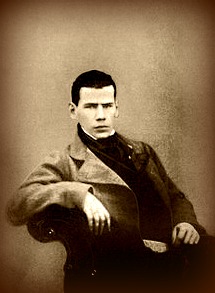
Bonus Question.  Can you identify this youthful photograph of a 19th century literary giant?  

Leo Tolstoi

Is it…

A.  Victor Hugo
B.  Gustave Flaubert
C.  Leo Tolstoy
D.  Fyodor Dostoyevsky

Answer Key:

  1. D (Naguib Mahfouz; won the Nobel Prize for Literature in 1988)
  2. B (Nathaniel Hawthorne)
  3. A (John Steinbeck; “Lifeboat” 1944 for Hitchcock and “Viva Zapata!” 1952 for Kazan)
  4. F (Gustave Flaubert) Note: Oscar Wilde changed his name to “Sebastian Melmoth” in 1897; Joseph Conrad was born Teodor Josef Konrad Korzeniowski in 1857; Lewis Carroll was born Charles Lutwidge Dodgson in 1832; George Eliot was born Mary Ann Evans in 1819; Voltaire was born Francois Marie Arouet in 1694
  5. A (Lewis Carroll; An early entry in Carroll’s diary anticipated the game as early as 1880.  The entry notes that, ‘A game might be made of letters, to be moved about on a chess-board till they form words.’  On New Year’s Day in 1895 Carroll wrote to Winnifred Hawke and told her of a game of his own invention which is very similar to SCRABBLE®)
  6. C (Lewis Carroll.  In his 1996 book, Jack the Ripper, Light-Hearted Friend, Richard Wallace proposed a theory that British author Lewis Carroll and his colleague Thomas Vere Bayne were responsible for the Jack the Ripper murders.)
  7. D (Glossophobia–also known as Peiraphobiafear of public speaking)
  8. A (Agatha Christie)
  9. D (Robert Frost; deployed to the Soviet Union by President John F. Kennedy in 1962)
  10. A (Allen Ginsberg; In June 1949, Ginsberg was arrested as an accessory to crimes carried out by friends, who had stored stolen goods in his apartment.  Ginsberg entered a plea of psychological disability and was admitted to the Columbia Presbyterian Psychiatric Institute.)
  11. B (Hilda [H.D.] Doolittle; H.D. was Freud’s patient during the 1930s)
  12. A (Maya Angelou)
  13. C (Joyce Carol Oates)
  14. B (Hilary Mantel for Wolf Hall, 2009 and Bring Up the Bodies, 2012 )
  15. A (Sidonie-Gabrielle Colette; her novel Gigi became the musical of the same name; And D (George Bernard Shaw’s Pygmalion became “My Fair Lady”)
  16. A (George Gordon Byron, 6th Baron Byron, later George Gordon Noel, 6th Baron Byron)
  17. A (Jonathan Franzen; The Question cites Rule no. 4 on Franzen’s list)
  18. D (James Joyce; question references Joyce’s first book, Dubliners)
  19. C (Oliver Goldsmith; The anonymously authored, The History of Little Goody Two-Shoes, a children’s story, was published by the John Newbery Company in London in 1765.  The story was later attributed to the Irish author Oliver Goldsmith, though this has been disputed.)
  20. A (Irène Némirovsky for Suite françaiseAnd B (Anne Frank  for Anne Frank: The Diary of a Young Girl)

Bonus:  C (Leo Tolstoy, 1848, age 20)

Scoring Table:
15 to 21 correct: Picayune Pundit
8 to 14 correct: Picayune Proficient
5 to   7 correct: Picayune Pedestrian (Read more Wikipedia)
4 to  0 correct: Picayune Pitiful (Consult USA Today, FOX News)

Posted in Uncategorized | 3 Comments

My Life in a Box, post by Jack A. Urquhart

©2013  (864 words)

Moving boxes

On July 23, 2009, I lost my job as a California civil servant.  Like many life-changing events, my ‘separation from service’ was sudden; I arrived at my agency’s San Francisco offices at 7:30 a.m. and by 9:00 a.m. I was on the street making my way to BART and the long trip home.  A banker’s box containing personal and professional items was all I carried away.

The train ride to the East Bay afforded time to consider what I’d placed in that box.  There were framed photographs—my children when they were younger, some recent snapshots of my spouse and close friends.  I’d included copies of public documents I was proud to have helped create along with postcards received from vacationing co-workers over the years; tucked in a coffee mug were business cards received from a few favorite consultants.

Here are eleven years of my life, I remember thinking as I rode BART home that morning.  Eleven years in a box.  Then came the obvious question: why have I saved these things?

Four months later, with home foreclosure closing in, I was still asking that question, only there were more boxes.  The condo my spouse and I had purchased in 2004 was stacked high with them—and at least half predated our move-in day five years previously.

Apparently entropy rules when it comes to the way some of us cope with our boxed-up lives.  So much of what we accumulate is simply stored away and left to sit, the work of winnowing our clutter having been deemed too arduous.  My spouse and I had procrastinated as long as we could.  But once we engaged the task, a kind of nostalgia set in.  Time and again as we were digging through a box-full of the past came the recollection of how pleased we’d been years earlier moving our things into a new home where we would enjoy the amenities of modern construction: central heat, real closets, the luxury of a large garage.  Just think of the storage space! we’d congratulated ourselves.

But suddenly, with harsh reality closing in, our accumulations didn’t inspire the same enthusiasm; there was the dwindling savings account, the home worth half what we owed, the decades of living that had piled up to limit our competitiveness in a depressed, youth-obsessed job market.  And all those boxes, of course.

Certainly we’d acquired plenty in the way of ordinary household items, nearly four tons according to then estimates; and for both of us, the bulk of a lifetime’s possessions took the form of heavy text.  For my spouse, a retired chemistry teacher, it had taken more than twenty good-sized boxes to contain forty years of teaching memorabilia, and only a few less for me, whose life and career had been all about reading and writing.  Even after multiple donations to regional libraries, we retained many hundreds of books.  Very soon everything would be moved to the other side of the country at a cost of 60 cents per pound.  By that reckoning my spouse’s teaching career rang up at about $1200, while my professional and recreational literary assets tallied considerably less.

Why then had we kept all that stuff through a bewildering number of moves over many decades?  Why hang on to so many things in boxes?

These questions perhaps weigh more heavily when a person reaches a certain (ahem) age.  Right about then some of us begin to question what our lives have been about, and what is necessary to our contentment.  And what isn’t.  Yet, as my spouse and I prepared to lose our home, I found myself wondering why there was still so much that I couldn’t bear to relinquish.

I can think of several explanations for this reluctance to let go.  There is the drive to preserve a legacy—a personal history in possessions to be passed on to our descendants.  Then again, there is the possibility of something peculiarly American in the acquisition of things rarely used.  Perhaps the drive to accumulate is a manifestation of how thoroughly we’ve bought into the notion that things define us, and that the more we acquire, the more we must be worth—which might account for the growth of the self-storage industry.  Apparently there is plenty of room for the surplus of our boxed-up lives.  A quick Google search reveals that the current area available for self-storing in the U.S. is over two billion square feet.  That translates to an amazing six square feet of extra storage per person.

Now, at the beginning of 2013, I find myself contemplating these possibilities anew as yet another move looms only a few months hence.  And I wonder if all these boxes (many of mine still unopened these three years later) don’t add up to something more simplistic—perhaps an effort, however futile, to forestall the ultimate separation from service, the final foreclosure?  Maybe all this acquisition and accumulation is about holding on to our lives for as long as possible, as if by packing away a few thousand tchotchkes we can capture time in a box and stave off the inevitable?  As if by clinging to our weighty things we can stay put here a while longer?

Posted in Uncategorized | Tagged , , , , , , , , , , | 13 Comments

A Letter I Wrote Long Ago, by Jack Andrew Urquhart

Pen and Paper

©2012 by Jack Andrew Urquhart (712 words)

9.29.2003

Dear Mom,

I guess insomnia, like so many other things, runs in our family, because here I am—early on the last day of my visit—wide awake and thinking how wonderful it has been to spend this week with you and to reconnect with my birth family.

Please know that I think it a privilege to have been part of your 80th birthday celebration. The hassles of bursting balloons and rock-hard sherbet aside, I derived so much pleasure out of seeing you bask in the love and devotion of the many friends who gathered last Friday to celebrate all the good things you are and do.

I know that I am sometimes critical and judgmental (another family birthright?), but I want you to know that I love and admire you.  I am proud of the vital and vigorously involved life that you lead.  And of course, I’m grateful to you and to Dad for the many gifts you’ve given me—among them an appreciation for words and conversation, for reading and writing, as well as a predisposition to listen and observe.  It is because of that heritage that now and then I am blessed with a glimpse into the truest, secret corners of another human being’s heart.  And when that happens, I remember that I am not alone, not cut off from the rest of the world, and certainly not solitary in whatever troubles, big or small, I might be experiencing at the time.

That said, Mom, I can say to you that I recognize how badly you need regular reassurance that you are loved and appreciated, and how particularly important it is for you to receive those assurances from your immediate family.  I wish I could wave a magic wand and make everything right in our clan; but what I can do is remind you of some old truisms: that is often those who love you who have the most power to cause you grief; that love sometimes wears many masks, and some of them are not very pretty.  What’s more, when it comes to family interactions, I think that sometimes when we are being most hurtful, when we are being most critically observant of each other, it is because we are reacting (in exaggerated fashion) to a reflection of our own worst fears and faults.  It’s a look-and-see game that is as old as the hills, and a game that we play best (or worst!) with those who are closest to us—our parents, brothers and sisters—because they more than any others have helped to make us who we are.

Of course, I’m speculating here, but if there’s any good news in this, perhaps it’s that as we get older, this same pastime can serve to open our hearts, can help us learn to love ourselves and each other a little more for all our similarities, differences, strengths, and weaknesses.

So, in bringing these ramblings to a close, I want to leave you with an observation: I believe—any and all appearances to the contrary—that your family loves you.  It may not be the prettiest, most pleasing kind of love, but look closer.  Look behind our masks.  And listen, really listen to us.  If you do, I believe you’ll be able to discern it for yourself—the love.  It’s there, hiding behind the scowls and frowns, behind all the hard and thorny words.  I know because I’ve found it there myself a few times.  And every time I do, I’m reminded of a poem I read years ago, the last lines of which made me cry on the spot for a sad truth recognized.  My memory is not what it once was, but I haven’t forgotten these few lines from a poem entitled “Goodbye,” written by a woman named Chana Bloch.  Here is what she wrote:

When they said, ‘if you eat this fruit,
You will die,’
They didn’t mean
Right away.

Can you imagine any truer words?  I guess it’s all—all our ups and downs—“just life” as they say.  Some of it tastes wonderful, some of it incredibly bitter.  And ultimately, all of it is lethal.  But in the meantime, what a banquet.  What a gift.

Andy

Posted in Uncategorized | 3 Comments

Jack A. Urquhart’s Quickie Book Review: Tiny Beautiful Things, by Cheryl Strayed

©2012 by Jack A. Urquhart (320 words)

Screen Shot 2012-12-06 at 4.42.57 PMI received Cheryl Strayed’s engaging, and often moving, Tiny Beautiful Things as a gift—one that (I’ll admit) I took my time in opening.  That is because normally an entire book devoted to real-life advice column letters wouldn’t be at the top of my reading list.  However, somewhere in the first few pages of this exquisitely intelligent—and yes, graceful—volume, Strayed (aka “Dear Sugar,” at the online publication, “The Rumpus”) managed to upend my prejudice.

Indeed, there is nothing tiny, but much that is hugely beautiful in Strayed’s writing.  Her response letters feature some of the loveliest, heart-stopping prose I’ve read in ages.

Witness these passages from her reply to a grief-stricken father whose only child (a gay son) was killed by a drunk driver:

“The entire premise of your healing demands that you…come to understand and accept that your son will always be only the man he actually was:  the twenty-two-year-old who made it as far as that red light.  The one who loved you deeply.  The one who long ago forgave you for asking why he didn’t like girls.  The one who would want you to welcome his boyfriend’s new boyfriend into your life.  The one who would want you to find joy and peace.  The one who would want you to be the man he didn’t get to be. 

To be anything else dishonors him…

Your son was your greatest gift in his life and he is your greatest gift in his death too.  Receive it.  Let your dead boy be your most profound revelation.  Create something of him. 

Make it beautiful.”

To prescribe acceptance and perseverance as a moral imperative to a fellow human being suffering a seemingly unbearable grief would be a tall order for even the most eloquently empathic communicator, the most extraordinarily gifted writer, the wisest of human beings.  How fortunate for Strayed’s readers that she is all three.

Posted in Uncategorized | Tagged , , , , | 1 Comment

Jack Urquhart’s Quickie Book Review: The Fault in Our Stars, by John Green

©2012

By Jack A. Urquhart  (170 words)

Who would’ve thought a story about star-crossed teens battling terminal cancer could be such an engaging, not to mention uplifting read? But that is what John Green manages in his lovely novel, The Fault in Our Stars.

His protagonist, 16-year old Hazel Grace Lancaster, who suffers from thyroid cancer, and her love interest, 17 year-old Augustus Waters (an amputee to osteosarcoma) are surely two of the most precocious, appealing, and believable teens to populate fiction in ages. Their wise-beyond-years, and often very funny conversations, keep the novel from slipping into saccharine/maudlin territory—which isn’t to say that Green’s novel doesn’t strum the reader’s heart-strings. It does. In fact, I recommend keeping a box of Kleenex handy.

Green’s memorable novel deals with the very human struggle to accept the reality of death; but more to the point, it addresses how important it is to accept—and make the most of—whatever life deals out. Including love.  Even when the rest of the cards in our hand aren’t pleasant. Or fair.

View all my reviews

Posted in Uncategorized | Leave a comment

Jack Urquhart’s Quickie Book Review: Bring Up the Bodies, by Hilary Mantel

©2012
By Jack A. Urquhart  (132 words)

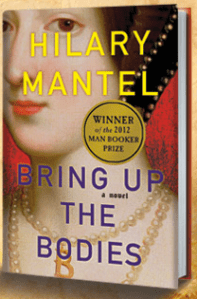
Bring Up the BodiesMantel is more than gifted—she’s an outright genius. If you read her Man Booker prize-winning Wolf Hall, you’ll know what I mean. Bring Up The Bodies (also a Man Booker winner) continues the saga of Thomas Cromwell (chief minister to King Henry VIII of England, 1532 to 1540) as he patiently directs his brutally focused energies toward ending the failing marriage between Henry and Anne Boleyn.  In the process, Mantel spins a damn good page-turner of a story into “literature,” the mark of a true artist—which is by way of saying that Mantel’s sequel is every bit as compelling as its predecessor.

Happily, the author is at work on the third installment of her prize-winning Cromwell saga. Who knows? Maybe Mantel’s Man Booker run will go three for three.

Posted in Uncategorized | Leave a comment

Manhattan Love Letter, by @jackaurquhart

By Jack A. Urquhart
©2012 (1400 words)

“Oh, earth, you are too wonderful for anybody to realize you. Do any human beings ever realize life while they live it–every, every minute?”—Emily, in Thornton Wilder’s “Our Town”

I’ve often lingered over those lines from Wilder’s play.  That is because I think they sum up the tragedy of being human and alive.  It seems we Homo sapiens suffer attention deficit disorder when it comes to apprehending our own lives, and that the vast majority of our time on this earth gets away from us—the seconds, minutes, hours sifting like beach sand through the fingers of our consciousness—usually while we’re not paying attention.

That has certainly been my story.  No matter how hard I try to attend the days of my life, I am able to appreciate only a sprinkling of the moments I’ve been allotted.

Take last Friday, November 16, for example—the day my partner and I met friends in NYC for a special occasion.  I distinctly remember telling myself as the five of us ambled around Manhattan that I needed to pay attention—that I needed to focus.

Just be here, Jack.  Be here now, I kept reminding myself.

That was because I wanted, on that special day, to perceive what was going on around me, to relish the brief hours we friends had together.

It helped that it was one of those gorgeous, bone-chillingly crisp autumn days—the kind of day you want to notice.  A day when the colors can move from a gray water-color wash to breath-taking brilliance in no more time than it takes for the sun to emerge from the cloud cover.

Don’t let these moments get away unmarked, I told myself.

But of course, they did get away.  As they always do.

Yet, now and then, a few runaways come home again for a visit.  Embellished in dreams, in moments of deja-vu, in the quiet of a sleepless night, they return one-at-a time, or in clutches, all dressed up and ready to give us another look at the finery we didn’t notice the first time around.

So it was for me half-a-day later as I lay abed in our mid-town hotel in the small hours of another morning.  A little of what I’d missed in the rush and whirlwind of the Big Apple’s eight-million plus distractions came home all shiny and bright and gussied up.

Like the traipsing recollection of my friend, ‘M’ laughing over drinks the previous day as she retold a favorite family story.  Like how, in my mind’s eye, I could see again the way M’s head snapped back over the slender stem of her neck as she cackled and how that physical response suited the subject matter.

Lying there in the dark it seemed of a sudden that my friend’s laughter demonstrated how all that stuff we endure—all the absurdity, and the misery, and the tragedy, and the utter joy of what it means to be alive and stumbling around on this planet—is enough to bowl a person over.  Which it is!  Only she wasn’t boo-hooing about it; rather, she’d go down chortling, thank you very much.  So then I remembered anew how there is enough life and curiosity and sheer determined compassion in one of M’s manicured nails to encompass all of NYC, and I wanted to weep that I hadn’t appreciated her genius anywhere near enough.

Which got me started on ‘B’, M’s engineer husband, a darling of a man who tempers his wife’s spice with sweetness, M’s volubility with quietude—and, from thence, I was off on the marvel of their happy pairing via the route of another recalled moment.

Actually it was an expression, the one I’d seen on B’s face the previous day at lunch—studious, determined, delighted.  It was, it occurred to me as I lay there on the far side of sleep, the look of a man who knew just what he was here to do.  And that was to eat it all up—and I mean absolutely every last morsel—starting with the six inches plus of hot pastrami on rye set before him courtesy of the Carnegie Deli.  Oh my god, I wondered tossing and turning abed, how had I not attended that?  How had I failed to mark that much pleasure taken in a simple act?  How had I failed to recognize B’s splendid appetite for what it really is—an appetite for life!  A taste for everything it takes to keep going, to keep experiencing and enjoying the varied flavors of human existence—not at all unlike the ever so eminently alive woman to whom he’s been married for ‘lo these twenty-something years!  And wasn’t that a revelation—to be able to sense, however half-assed, the subtle commonalities that feed the fires of attraction.  And love.

So you see how slow I am at fathoming the mysteries of the human heart and mind.  So slow that it has taken me years to sense something (and I emphasize that word, for it would be presumptuous to claim more) of what lies at the deepest, beating core of even the people I love most.

Like the child that perhaps still lives within our professorial friend ‘J’?  Like how the other morning, in the sleepless last hour before dawn, a remembered story fragment, a small piece of J’s childhood returned for a visit, arriving with a to-this-day salience so palpable that I can still sense something of how it might’ve been for him—to be a child, a boy forever doggedly following after a less than welcoming older sibling.  And all that longing.  And with that, the smallest notion of how the childhood experience of wanting to belong might help shape a life; how it might play a role in forging and polishing the natural resources of a brilliant mind—until that mind is razor-sharp, keen with a feeling for the fundamental nature of knowledge, reality, and existence.  Until it has attained and embraced a rigorous academic discipline.  And Wow!  Wouldn’t that bit of theoretical empathy, if only a little accurate, be a leap forward!

Which brings me home (literally) to the “special occasion” referenced earlier in this longer-than-I-thought-it-would-be love letter—because that’s what it is, a love letter—and the person who for fifteen years has been responsible for much of what is ‘special’ in my life.

That would be Ray.  The man who last Friday morning, November 16, 2012, became my lawfully wedded husband under the laws of the Great State of New York.

But here’s the thing—the embarrassing truth: I had a terrible time staying focused last Friday on much of anything leading up to and including our marriage ceremony, so busy was I stressing over minutiae, like: Would the ‘Q’ line take us all the way to City Hall?  (No!)  Would we find long lines waiting at the marriage bureau when we finally arrived?  (Again, No!)  Would our friends find their way to 141 Worth Street?  (Of course!)  Would they be able to snap a few decent photographs?  (It’s not smart to push your luck!)

It seemed all my damned affirmations, my will to presence had been washed away in a tidal wave of worry—until, in the midst of the ceremony, when the Celebrant began “the Declaration,” Ray took my hand.  And right away, I stopped worrying.

I suppose that sounds romantic, or perhaps saccharin, but the truth is that it didn’t feel that way.  Not then.  Not yet.

It wasn’t until much later—not until the wee hours of another Manhattan morning when that little golden grain of memory came back to me all dressed up and lovely—that I began to fathom why a small act had such power.  Why Ray’s sweet familiar face, all pink and flushed, eyes brimming with feeling, and patience, and happiness, and (oh my god!) love—why his hand in mine had brought me back into the moment.  Because, I think, there it was: real presence.  Another one of those rare realized moments—like a grain of beach sand in the palm of my hand.

And dear god, wasn’t that a little wonder—not that I believe we need a god to realize miracles.

Sometimes, it turns out—despite the inevitability of distraction and loss—one lucid moment at a time, or even just the one, can get the job done.

Posted in Uncategorized | Tagged , , , , , , , , , , , , , , | 6 Comments